6 seconds
Welcome, welcome to Fairy Tale Flip. We are in the month of March. Actually, we’re recording this on the last day of16 seconds
March. So, this will probably be put out in April rather than in March. U I am Vanessa Y. Rogers of Fabrica Folklore and this my co-host is Donna Lee Fields.26 seconds
Doorways to Learning is her podcast and she also has Scaffolding Magic website which is an education resource uh for34 seconds
educators span the ages. Um and we come together once a month and we do an episode about44 seconds
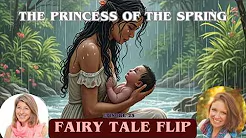
a fairy tale or a fairy tale adjacent story like we’re doing today which is more of a folktale. The Princess of the51 seconds
Spring, which is a Brazilian folk tale, which I know we say this every month, and we say this when we were talking1 minute
together. It’s funny how every month we’re like, “This is such a fascinating story. We have so much to talk about.” It’s true.1 minute, 8 seconds
Yeah.1 minute, 8 seconds
Um, so I am going to do the quick rundown of the spring, the princess of the spring. Uh basically there is a1 minute, 18 seconds
princess born of two giants like the god the giant of the moon and the giant of the river and she’s called the princess1 minute, 26 seconds
of the spring and she marries reluctantly the giant of the sun and she only does so because he agrees to let1 minute, 35 seconds
her visit her mother for three months of the year. However, he doesn’t stipulate that when she bears her child that she’s1 minute, 45 seconds
not allowed to bring the child with him with her to visit her mother. And so when that occurs, when she bears his child, he says, “No, you have to leave1 minute, 54 seconds
this child here. He may not leave the palace.” And so she goes to find her mother, but her mother is nowhere to be found. and she eventually finds theChapter 2: “Princess of the Spring” story summary and cultural backdrop
2 minutes, 3 seconds
giant of the wind who leads her to a castle where the land a land giant is holding her captive and she rescues her2 minutes, 11 seconds
mother. They go back to their palace, uh, the palace of pearls where the river and ocean meets, and she discovers that she’s been gone way longer than 32 minutes, 20 seconds
months. And originally, her husband was worried. And then he just is angry. And he decides he’s done waiting, and he2 minutes, 27 seconds
marries a new wife. And the new wife uh is jealous of the old wife and puts the baby in the kitchen to be a slave. And2 minutes, 37 seconds
when she discovers uh her her child is in the kitchens and that her her husband has remarried, she takes her baby back2 minutes, 46 seconds
and she dives down into the deepest parts of the ocean. And she cries for 40 days and 40 nights until the oceans and2 minutes, 52 seconds
the rivers swell to cover the the forest and to cover the palace. Uh and then once she her grief has spent after the3 minutes, 2 seconds
40 days her son is called the giant of the river and it is an explanation3 minutes, 9 seconds
giant of the rain. Sorry Vanessa giant right.3 minutes, 12 seconds
Yeah cuz otherwise we’re going to confuse our listeners. Such a great job though.3 minutes, 16 seconds
I hope that I said it correctly when I was recording it because maybe I I recorded I’m sure.3 minutes, 22 seconds
Okay. Okay. So the sun was called the giant of the river rain. Yeah, that’s right. The sun is called the giant of the rain and it is an3 minutes, 30 seconds
explanation for uh the rainy season in the Amazon basin. So any other any other3 minutes, 39 seconds
things that you wanted to point out of that that you did it. Yeah. And I wanted to say that I asked Vanessa to do both the introduction and the summary of the3 minutes, 47 seconds
story because I I would have gone into way much more detail and she just recorded her version of the story. So she, you know, she has it in the back of her mind. She did it gorgeously and it’s3 minutes, 56 seconds
hard to get all the giants straightened out so I’m not surprised and forgive me for interrupting you.4 minutes
I know and I always want to call them gods and goddesses because that is what we are used to in the European tales and so it was really difficult for me to4 minutes, 8 seconds
continuously call them giants and and giantesses.4 minutes, 12 seconds
Right. Right. Right. So let’s talk about that because I I believe that the the whole idea of a giant instead of gods is4 minutes, 20 seconds
because of Brazil, Brazil itself and the influences and you wanted to talk about the history of Brazil and the influences of folktales on Brazil which is4 minutes, 28 seconds
virtually the same thing. So you want to start?4 minutes, 31 seconds
Uh sure. But, you know, I honestly what I discovered about the giant part was that they didn’t it was assumed. It’s4 minutes, 39 seconds
not really known. Um, but it was assumed that it was in part due to the not really having a word that encapsulated4 minutes, 47 seconds
what their specific folklore uh was. Um, in part because the European ideas were4 minutes, 56 seconds
quite different from what the indigenous tribes had. their their spirits were more uh imbued and so they were part of5 minutes, 5 seconds
the earth whereas in a lot of the mythology that we are familiar with in much of Europe they are are apart they5 minutes, 13 seconds
are not in the earth but kind of apart uh I’m saying apart but I’m saying uh5 minutes, 20 seconds
further not on the same plane uh basically and so the the ideas came together of the indigenous people and5 minutes, 29 seconds
the European Portuguese ies and it kind of got smooshed and formed into the word giant. And so that is what we are left5 minutes, 37 seconds
with. There’s a lot of different stories about giants. This particular story comes from a collection of 12 different stories about the giants in Brazil.5 minutes, 49 seconds
Yeah. And it’s really important that we do talk a little more about giants in later on in in this podcast because it’s5 minutes, 55 seconds
um there aren’t any other cultures I believe that use giants as their god replacement. And it’s really important6 minutes, 4 seconds
that the gods are about nature. This is you know they all have to do with the god excuse me the giant of see we all I6 minutes, 10 seconds
get so confused um the giant of nature and in Brazil nature is all important.6 minutes, 16 seconds
So, spirituality is a is an enormous part of the Brazilian culture and that also comes from the Portuguese and African influence. And I just wanted to6 minutes, 25 seconds
say just to start it because um again giant for me is very important and it’s fascinating is that it comes from the6 minutes, 32 seconds
Portuguese influence and Portugal is a teeny tiny country. It’s not one of the smallest country in the world, but it’s very small. And it’s it’s it’s just a6 minutes, 40 seconds
part of this aber um peninsula. And in my mind, they needed something big, not6 minutes, 47 seconds
just a god. They needed a big god, like a big presence to sort of support them in not being swallowed up by a culture6 minutes, 56 seconds
literally right next to them that could very easily just sort of breathe in them. And it’s interesting because in European tradition, giants are often7 minutes, 4 seconds
these big lumbering dumb creatures of chaos, right? They just create a lot of7 minutes, 11 seconds
um chaos wherever they go and they smash things and they have tiny teeny weeny brains. Uh but in this instance, they7 minutes, 20 seconds
they are not that at all. Right. They are uh encompassing nature spirits basically.7 minutes, 26 seconds
That’s right. I I love that. I didn’t even think about that, but it’s true because in this the brilliant Brazilian folktales, it originates from the Amazonian myth and the in the Portuguese7 minutes, 34 seconds
folklore as we were just saying that but they’re magical beings and they’re guardians of the forests and they’re guardians of nature, the supernatural7 minutes, 42 seconds
force forces. So in that respect they’re it’s very different. Yeah.7 minutes, 47 seconds
All right. So let’s talk um I you know I always like to ground us in our place where the story comes from. So, I want to talk a little bit about Brazil and7 minutes, 56 seconds
the history of the colonization of Brazil because it really comes into play in the story about how this this story was even uh kind of formed and created.Chapter 3: The influence of indigenous and European cultures in Brazil
8 minutes, 6 seconds
So, Brazil, if you’re looking on a map, is the fifth largest country in the world. Russia is the largest. It goes8 minutes, 13 seconds
China, US, Canada, and then Brazil is very populous. Um, and it also has 1/5if of the water that runs on the Earth’s8 minutes, 22 seconds
surface is carried by the Amazon, which is for reference, it’s 10 times what the Mississippi River holds. Um, at its8 minutes, 29 seconds
flood season, it can be up to 30 miles wide. The Amazon River can be up to 308 minutes, 37 seconds
miles wide and it can rise and 30 feet annually and it can cover entire forests8 minutes, 45 seconds
which is insane to even conceptualize. I can’t I can’t conceptualize that at all really.8 minutes, 52 seconds
Um there’s in fact there was a um this is an interesting fact that I didn’t look into very much but I feel like could be a cool podcast9 minutes, 1 second
on its own. There’s a hidden river underneath the Amazon that was discovered in 2011. Oh my goodness. How fascinating.9 minutes, 9 seconds
Yeah. And it’s um a second river flowing 2.5 miles underground the Amazon. Isn’t that crazy?9 minutes, 16 seconds
Does it follow the entire Amazon River?9 minutes, 18 seconds
Oh, I didn’t look into it. That Wait, that’s something to look into for sure.9 minutes, 24 seconds
Okay. Um, okay. So, there are 228 languages spoken in Brazil, which made me kind of go down a rabbit hole because9 minutes, 31 seconds
I was like, but wait, what how many languages are in the US? Um, and it says9 minutes, 37 seconds
according to Wikipedia, it was 350 to 430. So, that’s a wide span of we don’t9 minutes, 43 seconds
know how many languages. um 117 of if we’re looking at North America of those9 minutes, 50 seconds
languages are 117 are indigenous and 99% of those indigenous languages are endangered and that is reflective as9 minutes, 59 seconds
well in Brazil um their their indigenous languages are 217 so more than in the uh10 minutes, 7 seconds
North America uh but they also have most of them are endangered I think they have fewer than we do that are endangered in10 minutes, 15 seconds
part because there are still areas that tribes do not have really a lot of connections with other people. And so there are still some10 minutes, 23 seconds
there are still some tribes that speak their own language, but by and large Portuguese is the main language of Brazil.10 minutes, 33 seconds
Um, and this is a fun fact that I that I came across in my cultural anthropology10 minutes, 40 seconds
class. Brazil is really held up by cultural anthropologists as the shining10 minutes, 47 seconds
example of race being a cultural uh culturally shaped idea rather than10 minutes, 55 seconds
biological. So in United States and a lot of European countries, we see race as something that’s biological and we11 minutes, 2 seconds
hold it to a really rigid scale. If you have one drop of African blood, we we11 minutes, 8 seconds
call you black. Um whereas in Brazil they the government took a consensus a11 minutes, 15 seconds
census sorry uh recently in the northeastern part of Brazil and asked people what color they were and they11 minutes, 22 seconds
received 134 different answers for what color they were. They had 134 colors to11 minutes, 30 seconds
describe themselves. So that means that if you are a sibling um that from the same parents and you have the same11 minutes, 39 seconds
ancestry and the same genetics, you can still be considered two different races because it’s not just based on your skin color, it’s based off of your hair color11 minutes, 47 seconds
and your eye color and your class can come into it. Like how much money you make and how many achievements you’ve made. So your race can actually change11 minutes, 56 seconds
based off of where you are socially and in in in the ranks. And also if you’ve gotten a s a suntan, like if you go out12 minutes, 3 seconds
and get a sunburn, you can change your race.12 minutes, 7 seconds
And so this this is um really held up by cultural anthropologists when we’re12 minutes, 14 seconds
talking about race as race is not perceived the same across the board. And Brazil is not the only country that does12 minutes, 20 seconds
this. Um but it’s it’s their shining example of it being a cultural construct12 minutes, 27 seconds
rather than something that is true. Um, so Vanessa, I think that’s really really interesting and you’ve researched it12 minutes, 34 seconds
really well and then we have to say why does it matter? Why is it that it’s so important to have these statistics and to classify people and to me it just12 minutes, 43 seconds
means that’s why um it could very well be the reason why Brazilians lean so much into nature because nature is nature. You don’t need to, you know, it12 minutes, 51 seconds
doesn’t matter about money. It doesn’t matter about birth or or um you know your origins. All that matters is that it’s a living being. Nature is a living12 minutes, 59 seconds
being and we are living beings within nature. So, oh crazy.13 minutes, 5 seconds
There’s quite a bit of debate about what is a better system of perceiving race.13 minutes, 10 seconds
Um, and some people argue that the way that Brazil does it is more equitable.13 minutes, 17 seconds
However, if you look at their economics, uh, it doesn’t actually pan out that way. Um, and some people say that13 minutes, 24 seconds
there’s it’s easier for movements, for instance, in the US, like anyone who considers themselves black or has, you13 minutes, 31 seconds
know, one drop of black blood can be in a movement to try and fight for inequality and it makes it easier in13 minutes, 40 seconds
that instance. So, there’s this ongoing debate between economic lots of different groups about what is a13 minutes, 48 seconds
better way to fight injustice and inequality. Yeah.13 minutes, 54 seconds
And so because race is very much, you know, a part of our everyday life, even if it’s just something that we’re14 minutes
perceiving and culturally, um, ingrained in us. And so, uh, being able to have that language is is helpful. And so,14 minutes, 9 seconds
it’s it’s it’s it’s an interesting debate for sure.14 minutes, 12 seconds
Well, again, and and I will just go back to the t the tale that we’re, um, analyzing today, and that it’s all about nature. There’s no there’s no hierarchy14 minutes, 19 seconds
in the beings in the tale really just about nature itself and and um contemplating the forces of nature and14 minutes, 28 seconds
whether they’re being fair to each other. I find that fascinating and a big part of this tale is being true to the nature of wind and sun and moon and and14 minutes, 37 seconds
land. So I find that fascinating and you know race doesn’t come into it.14 minutes, 42 seconds
Yeah. So, at the end at the end there’s a there’s a line that does come into it, but um what is the line? I know we’re skipping ahead, but what is the line?14 minutes, 50 seconds
When the baby is placed in the kitchen, the text says like a little black boy. It’s true. I was shocked by that line. Yes.14 minutes, 58 seconds
Yes. And you you will not be shocked after you hear these statistics. I I So, this is the history. This is a really fascinating history and it’s reallyChapter 4: Historical context: colonization, slavery, and migration
15 minutes, 7 seconds
tragic really. Um Okay. So they’re Brazil is colonized by Portugal in the 15 in 1500. So that’s just right after15 minutes, 16 seconds
Columbus um has discovered quote quote unquote discovered quote unquote the Americas.15 minutes, 22 seconds
Um when they arrived to Brazil, these are extremely rough estimates. Um there’s about 2 to 10 million somewhere15 minutes, 29 seconds
between two and 10 million people indigenous people already living in Brazil. And we talked about this earlier15 minutes, 37 seconds
when we talked about the public and Istasiatal uh tale. Wow. I’m impressed.15 minutes, 44 seconds
Um when the Spanish came to conquer the Aztecs and everybody basically died of15 minutes, 52 seconds
you know yellow fever and typhoid and all of the European illnesses. The same thing occurred across the board all15 minutes, 58 seconds
across um all across the Americas. this wiped out I think 80 to 90% of the16 minutes, 6 seconds
indigenous population. So it’s extreme devastation to the indigenous population uh with just the lack of immunity to the European illnesses.16 minutes, 19 seconds
Um so Brazil gets its name because the first product that they begin to mine is Brazilwood.16 minutes, 27 seconds
Um, and then it goes to sugar production and then they start mining gold and diamonds in late 1600s and later. Now,16 minutes, 35 seconds
because they’re doing all of this, they need labor and so of course they try and enslave the indigenous people, but they16 minutes, 43 seconds
are terrible slaves because they are able to easily escape because it’s extremely forested. So, they are able they know the land and the layout and so16 minutes, 50 seconds
they’re able to to leave much easier than someone who’s being brought in. And so they start bringing in slaves from16 minutes, 58 seconds
Africa before anyone else starts the slave trade slave trade. And they bring in 5 million17 minutes, 6 seconds
enslaved Africans, which is 10 times the number of the US and Canada. And part of17 minutes, 14 seconds
that is because their cost calculation told them that it was cost effective, more cost-effective to bring in a new17 minutes, 22 seconds
African slave than to take care of and keep alive the slaves that they’d already brought in, which is17 minutes, 29 seconds
insane to to even think of. I will say that the Jesuit missionaries who had been brought over were quite against all17 minutes, 38 seconds
this slave trade and they protested vehemently. So there’s there’s something to be said about that, but it didn’t stop them. Um, but if you look at the17 minutes, 47 seconds
demographics of Brazil now, you can tell that there’s a strong African influence17 minutes, 54 seconds
um for the the people who are there currently. And that’s that’s why because of the the sheer number of kidnapped and18 minutes, 5 seconds
captured people that they brought over to Brazil to um be their slave labor.18 minutes, 10 seconds
And if if you don’t mind, let me just add that you’re saying that they’re the first ones that have slaves and they were also the last country to abolish18 minutes, 16 seconds
slavery. And so in my in you know my interpretation also is that folktellers in Brazil would want giants to be their18 minutes, 24 seconds
champions because they needed they needed a big presence to help try to free themselves and it seems that nature and their stories it seems natural that18 minutes, 33 seconds
they would anthropomorphize nature because humans around them were so cruel to them. Yes. So that’s also really interesting.18 minutes, 41 seconds
Yeah, that’s very true. Um, another So after they stop bringing in slaves, they start bringing in immigrants and unlike18 minutes, 49 seconds
the US, so we started using indentured servants, which were basically slaves but just European, right? Right.18 minutes, 57 seconds
Um, they had a more a more just immigration system. And so they bring in19 minutes, 4 seconds
uh Portuguese, Germans, Astrohungrians, Slavic groups, uh Middle Eastern, Asian.19 minutes, 10 seconds
So Brazil is one of the most diverse countries in the world because of all the different immigrants that moved.19 minutes, 18 seconds
They actually have the largest Japanese uh population outside of Japan. Really? Really? Yeah.19 minutes, 25 seconds
I thought that was in Yeah, I thought that was in South America, but Brazil is in South America. Okay.19 minutes, 31 seconds
Um, and then uh so we get I I mentioned this before. We get the story from Elsie Spicer El’s who wrote this book for19 minutes, 40 seconds
North American children in 1918 in the book of Tales of Giants from Brazil. She was a Portuguese woman who was married19 minutes, 49 seconds
to a missionary. And so most of these uh tales that are from there um I have19 minutes, 58 seconds
later on in my notes she she actually got it from someone else who was a collector and I’ll find his name later.20 minutes, 5 seconds
Um but so she she’s changing the story so that it will be more palatable for20 minutes, 12 seconds
for children as well. And um it’s also you know gone through a lot of different variations by this point that we we get the story from.20 minutes, 24 seconds
So I wonder if we could just talk about the title of the story first because I found that a really intriguing contradiction from when I when I was doing the research. The the title of the20 minutes, 32 seconds
story is the princess of the springs, right? Or princess of the spring, right?20 minutes, 37 seconds
And me I I went immediately to spring water, you know, a spring of water. And20 minutes, 43 seconds
um the reviews that I read about it were talking about spring as in the weather, the season. And they felt that that was20 minutes, 51 seconds
very ironic because Brazil doesn’t have spring. It doesn’t have that season of spring. And I thought, what are you talking about spring is a season for?20 minutes, 59 seconds
It’s about the daughter of the river. So obviously, it’s a spring of water. And to me, that makes a lot of sense. So what did you think about that whole21 minutes, 7 seconds
argument? That makes so much more sense because I also um thought of spring as in the season. And so u and I al we’ll21 minutes, 16 seconds
talk about this point later because I want to talk about what you brought up.21 minutes, 20 seconds
I originally went to uh Pphanie, the story of Pphanany, because she’s the goddess of the spring. But it took my21 minutes, 27 seconds
mind a while to come to that realization that oh wait, Brazil doesn’t have a spring. How does that make any sense?21 minutes, 34 seconds
But she um her son is the giant of the rain, which is they have two seasons,21 minutes, 42 seconds
right? They have rainy and dry. But some people say it’s not really a dry season. It’s just less rain.21 minutes, 50 seconds
Um so rain and rainier season. Um, and and so but I think that that makes a lot21 minutes, 57 seconds
of sense. And a lot of the Portuguese uh origin stories that I’m going to coverChapter 5: Water as a living force and symbolism in Brazilian mythology
22 minutes, 3 seconds
later really cover uh female entities and spirits that encompass water. So that makes a lot of sense.22 minutes, 13 seconds
Okay. Because there’s more continuity in my book. I mean, our listeners can decide what works for them, but there’s more continuity. We have the we can22 minutes, 20 seconds
start with the giant of the moon. And I love when I first read it, it was the moon reflected in the river. So you can just have this beautiful image of the moon traveling down the river in water.22 minutes, 30 seconds
And so they birthe the princess of the spring, you know, just a smaller river, although she is a force of nature. And then she has a son of the rain. So yeah,22 minutes, 39 seconds
it’s more continuity that it has to the water passes down. What I find really interesting in the story, I don’t know if we can go anywhere, this is that the22 minutes, 48 seconds
moon kind of disappears as a character in the story. He he marries he convinces the river the giant of the river to22 minutes, 55 seconds
marry him and then he’s gone. The son comes into the story. Did you find that at all?22 minutes, 59 seconds
I had that same question. I was like when the princess goes to the the castle or the palace and she’s looking for her mother, I was like well where’s her dad?23 minutes, 8 seconds
Why is he not around and helping?23 minutes, 11 seconds
That’s right. Um there was also I mean I I just wanted to talk about specific lines in the story also because it’s very beautifully told and it talks about23 minutes, 19 seconds
when the baby daughter of the moon giant and giantist and that’s the last time we hear about the moon and that’s the second paragraph of the story. It was decreed among the giants that she should23 minutes, 27 seconds
be the princess of all the springs and should rule over all the rivers and lakes. Again to me it makes sense that she is the the water the spring. Um and23 minutes, 37 seconds
the light of her eyes was the moon. It was like the moon beams and her smile was like moonlight on still waters.23 minutes, 42 seconds
Again, just this beautiful v um visual image of the moon wafting down water and23 minutes, 50 seconds
her strength was the great river and her fleetness of foot was the sweetness the swiftness of the great river. So for me the appearance comes from the moon and23 minutes, 58 seconds
the strength comes from the river. The strength comes from water. And what you’ve been saying about weather is it’s24 minutes, 5 seconds
obvious the water is such a presence in Brazil. Mhm.24 minutes, 11 seconds
All right. And then a couple of other things because the moon does disappear in the story for some reason, but the24 minutes, 17 seconds
sun comes out and you were just about to start talking about different other folktales that are similar to this24 minutes, 26 seconds
story. Pphanie for one. Um in this story, the son moves the daughter and she makes a choice. She doesn’t want to marry the son at first. The princess of24 minutes, 34 seconds
the spring doesn’t want to marry the sun giant in the beginning, but she does.24 minutes, 38 seconds
She agrees to. And it’s her decision to only go for nine months of the year. And those three months, she insists on going24 minutes, 46 seconds
back to her mother, the river. So that’s the my distinction, Vanessa, is that it’s her choice. It’s not Zeus’s choice24 minutes, 54 seconds
as in Pphanie. So would you like to comment on that?24 minutes, 58 seconds
No, I think I mean I think that you that’s a a good distinction between the two stories and the two characteristics,25 minutes, 6 seconds
the two characters in the story that she has more agency and she determines um her own her own path more so than does25 minutes, 15 seconds
Pphanie. Praanie is much more passive uh than this princess, right? And so um the other part I find25 minutes, 24 seconds
interesting is um the she the prince rejects the sun suitor because she won’t leave her mother the river and so she25 minutes, 31 seconds
does finally leave her but she wants to be with her mother she’s so attached to her mother and why is it if you think of the sun one could see the sun as fairly25 minutes, 40 seconds
stagnant in the sky it’s not I mean it has this incred you know incredible power of light coming out of it shooting25 minutes, 47 seconds
out of it and light is movement but we could say the sun is stagnant in the sky while her mother flows across the land.25 minutes, 54 seconds
And to her, what’s attractive is movement.25 minutes, 58 seconds
Um that’s one of that’s one of the big takeaways I had of the story. Um so on that point of movement, one of myChapter 6: The wind and nature spirits’ role in folktales
26 minutes, 7 seconds
my questions I was going to ask you. It was kind of commentary I that I found funny was when she goes to the giant of26 minutes, 15 seconds
the wind and he’s basically throwing this giant temper tantrum until he’s he’s hangry, right? He’s just hangry and26 minutes, 23 seconds
then once he gets the food in him, he’s a civilized person. But what were your and and that has to do a lot with, you26 minutes, 31 seconds
know, how the wind is a bit temperamental, I believe. And um and and the movement of the wind. It can be very strong or very light.26 minutes, 42 seconds
That’s right. What one of the commentaries that I that I read about the story and I I agree with it wholeheartedly is that there’s very they’re very true to the nature of26 minutes, 51 seconds
nature and so yes wind comes in furiously and it doesn’t it doesn’t make distinctions of what it affects. So a26 minutes, 58 seconds
huge torment of wind is going to pick up anyone in its path. Now the father its father knew that. So it knew that the princess of the spring should not talk27 minutes, 7 seconds
to the wind when it was in its fury but wait for it to calm down. And wind does calm down. And so, as you’re saying, it27 minutes, 15 seconds
was hungry. It had dinner and then the father was smart enough to wait until it had had dinner and it could calm down before it introduced the princess of the27 minutes, 22 seconds
spring. And then it was absolutely happy to help. Yeah.27 minutes, 26 seconds
And I found it fascinating that the wind thought for a minute and then knew exactly where the mother of the river was. And it’s just like the nature of27 minutes, 35 seconds
wind. Wind can get into virtually anything. And so the wind, you know, its mind saw into every element, every27 minutes, 44 seconds
corner of the earth and found where the mother was.27 minutes, 47 seconds
So to me again, these stories, especially presented by the author that you were talking about, are very true to the nature of nature.27 minutes, 57 seconds
Okay. So I’m I’m interested to hear your take because I immediately went to Praphanie um when I when I read the story. Actually, I I thought about28 minutes, 5 seconds
Praphanie and then I thought about Sedna, but I’ll talk about her later.28 minutes, 9 seconds
Um, and Praphanie, just to remind our listeners, she was abducted by Hades because Hades and Zeus made a secret28 minutes, 16 seconds
pact uh saying that Hades could marry Pphanie, but he didn’t he didn’t consult the mother deer or Pphanie. And so Deer28 minutes, 26 seconds
uh throws the entire world into a griefstricken winter until Zeus relents and says, you know, basically says28 minutes, 34 seconds
everybody’s going to die unless Deer allows things to start growing again.28 minutes, 38 seconds
And so he allows Pphanie to come live with her mother u for part of the year because she’s tricked into eating pomegranate seeds. And so that ties her28 minutes, 46 seconds
down to the underworld. And so she’s not allowed to live her entire existence on on the normal plane, but she has to live28 minutes, 53 seconds
with Hades for a certain part of the year. And so the the visiting of the of the mother and the uh living in two29 minutes, 2 seconds
different places in two different times that made me really think of the princess of the spring as well. But29 minutes, 9 seconds
what is fascinating is that Portuguese has its own version of the Pphanie tale29 minutes, 16 seconds
and it’s thought that um so this the woman the goddess is called Adagena and it’s from the Lustian29 minutes, 25 seconds
Lustanian people and it’s thought that the prototype I don’t know the linguistic terms um comes actually from29 minutes, 35 seconds
a very old tale. So Homer wrote these tales down for Greek mythology in um 7th29 minutes, 43 seconds
century BC. So 700 something BC. Uh but these tales are older than the Kelts.29 minutes, 50 seconds
They are likely over 4,000 years old coming from the Bronze Age 3,000 years old. And they believe that the story of29 minutes, 58 seconds
Pphanany and Adagena come from the same root and the peoples spread throughout all of Europe. And so the stories are30 minutes, 6 seconds
slightly different but have same uh structure. So Adagena literally means reborn. She’s a goddess who dies and30 minutes, 15 seconds
returns and explains the seasons. Uh when she returns to the underworld, it’s winter. When she comes to the um the30 minutes, 22 seconds
land, it’s spring and summer. Uh but she doesn’t she’s not married. She is she is power and she is darker than Pphanie30 minutes, 31 seconds
because she’s always been the queen of the the underworld. And when the Romans come to Portuguese to Portugal to kind30 minutes, 39 seconds
of claim that space, they discover all of these inscriptions.30 minutes, 44 seconds
What what do they call them? Um there’s all these stone markings of this girl who they hieroglyphs or something like that.30 minutes, 52 seconds
The pro Yes, the pro um the Roman version is pro prorina. That’s Prourpina30 minutes, 59 seconds
is what they call her in the Roman uh mythology and they automatically recognize her as Pphanie as well. Um,31 minutes, 8 seconds
and so that that’s really fascinating that she is a really strong presence in31 minutes, 14 seconds
Portugal as well. This this princess um who is attributed to the seasons. Um31 minutes, 23 seconds
I there’s also another female deity pre-Christianity31 minutes, 29 seconds
that is associated with springs and forested valleys who was worshiped by31 minutes, 36 seconds
these same people the lustanian lust these people prior um oh31 minutes, 44 seconds
you usually pull off those pronunciations it’s a lot of syllables less less Ianian. I don’t I didn’t write it out.31 minutes, 53 seconds
Um let’s have one of our listeners send us a recording of that saying that five times fast.31 minutes, 59 seconds
Yeah. Um she marries uh Rio who is the son. He’s associate he’s the god of32 minutes, 6 seconds
thunder and um mountains and they believe that he is basically the prototype to Zeus. He is who Zeus is32 minutes, 16 seconds
mapped after and Na her name is Nabia and she and Ryo um marry. And so it is32 minutes, 25 seconds
believed that this is like the skeletal structure of the princess of the springs who is um basically a water goddess and32 minutes, 33 seconds
who has a union with a sky god. Um, and then we mentioned talking about this story, this this journey kind of changes32 minutes, 41 seconds
through the the generations and this is a story that we’ve talked about the Moa Incantada. Do you remember us talking about possibly doing this story?32 minutes, 51 seconds
No, but I love it. Let’s go. But let’s go.32 minutes, 53 seconds
This was this was one that we had voted on prior. Um, but it wasn’t voted on.32 minutes, 59 seconds
So, it was it was one I told it wasn’t one that you had had recorded. So, I was probably more familiar with it. Um, but33 minutes, 6 seconds
it’s believed that Nabia basically transformed in more modern days into this folktale of this Moorish princess33 minutes, 15 seconds
who’s awaiting her husband to return and he doesn’t return. And so she becomes enchanted33 minutes, 22 seconds
attached to a water source. Most of the time she’s attached to a water source and she’s guarding a a treasure and only33 minutes, 30 seconds
a purehearted and brave soul is able to gain the treasure from her and she’s33 minutes, 37 seconds
always seen um combing her long black hair with a golden comb. Um but she’s33 minutes, 44 seconds
considered kind of like a a water genie of sorts. And so it’s believed that Nabia kind of transforms into this folk33 minutes, 52 seconds
tale that is widespread throughout uh Portugal today and then that story was33 minutes, 59 seconds
brought over to Brazil um and kind of changes into what we see today.Chapter 7: Persephone’s abduction vs. Brazilian “Princess of the Spring” agency
34 minutes, 7 seconds
Wow, Vanessa, those that’s really fascinating. So I have two questions for you. First of all, um, with kind of34 minutes, 15 seconds
comparing Pphanie, the Pracphanany story, not not the Roman versions of it, but the Greek version of Pphanie with the princess of the spring is again I34 minutes, 24 seconds
I’m saying Praphanie was a victim and she the patriarch decid made decisions for her. Um, she she was first kidnapped and then we could say she was raped.34 minutes, 34 seconds
We’re not sure, but anyway, she was kidnapped. She was um sold off by the king of the gods by Zeus. She was sold off without even her mother knowing. Um,34 minutes, 43 seconds
and then she was tricked into staying for those six or three or whatever how many months, whatever part of the country you’re in. Um, because she was34 minutes, 52 seconds
hungry and she ate and she so was tricked into having to stay. It wasn’t her decision. Whereas with our story34 minutes, 59 seconds
with the princess of the spring, she’s completely empowered. She makes her own decisions. Um, I will, this is a little tangental that you were saying. I love35 minutes, 7 seconds
how you said the sky and the water met in these stories. And that’s exactly what happens in Princess of the Springs.35 minutes, 13 seconds
It’s the daughter, the princess of the springs and the sun. And every night I live in the most amazing place in the world. And then every night I go out to35 minutes, 21 seconds
the beach and watch the sunset and it is the sun kissing the water as it goes down, you know, melting into the water.35 minutes, 26 seconds
And so there’s a union and so it really makes sense. But what I’m saying here in the story is that the princess is empowered and not praanie.35 minutes, 35 seconds
And I’m wondering how then Sedna plays into this. Is is this something you found that it’s also similar thread?35 minutes, 41 seconds
Because Sedna is another completely I I want to go into the Sedna story, but I want to comment on your story. I I’m wondering if it’s the Brazilian35 minutes, 50 seconds
influence of these stories like you these stories are coming from Portugal and then they’re being transformed once they hit Portugal and they’re having the35 minutes, 59 seconds
influence of the indigenous people who live in Brazil. And I’m wondering because if you think of more in Canthala, she’s also pretty passive,36 minutes, 7 seconds
right? She’s waiting. She’s just waiting for her husband to over to come or she’s waiting for a prince to come. And I’m wondering if it’s this like this36 minutes, 15 seconds
European ideology that is being placed on them. Whereas maybe um and I and I didn’t do enough research to to really36 minutes, 24 seconds
speak to maybe some of the cultures in in Brazil are more matrinal m met m met m met m met m met m met m met m met m met m met mat you know36 minutes, 32 seconds
matriarchal matriarchal matriarchal um and have a you know more aggressive36 minutes, 39 seconds
female ideology and so maybe that is just placed on to that story because36 minutes, 47 seconds
that’s how their culture or one of the cultures at least was um thinking. So I I see it just not not that they’re not36 minutes, 56 seconds
connected, but maybe it was a change of how the cultures wanted to accept that story.37 minutes, 3 seconds
It’s very possible neither of us did as much research as we wanted to on Brazilian culture. And it’s not easy to do because as you were saying, there’s so many different um indigenous influences on the Brazilian culture.37 minutes, 14 seconds
What I what I do know very little bit about is Brazilian is color. I mean to me Brazil is color to it’s it’s it’s37 minutes, 22 seconds
loud. It’s music. It’s gorgeous um um you know expressions of different37 minutes, 29 seconds
types of communication with the body, with the voice, with the land. And so these stories to me also are a37 minutes, 36 seconds
celebration of the the inner person. Um again what we were saying in the beginning is they don’t represent any37 minutes, 44 seconds
hierarchy of race. They represent the nature and um the equinimity but the37 minutes, 52 seconds
tress of nature and so I mean to me makes a lot of sense and I I feel very comfortable with it.38 minutes, 1 second
Whereas, as you were saying, the European stories have so much of the patriarch embedded in the telling of the38 minutes, 8 seconds
story and in the plot, you know, the line of what happens to the w men and women. Yeah.38 minutes, 15 seconds
So, exactly. Yeah.38 minutes, 17 seconds
Um, okay. So, going back to Sedna. So, Sedno was a story that we examined in episode 17. And if you were interested38 minutes, 25 seconds
in listening to the Pphanie and Deer story, I believe that was 16. I went back and looked in case people wanted to to listen to those stories.38 minutes, 35 seconds
Um, so I so Sedna’s the story of Sedna um is basically a girl she’s she’s under38 minutes, 43 seconds
the theme of reluctant bride and there’s a lot of these reluctant bride themes throughout uh global folklore. Um, and38 minutes, 52 seconds
we talked a lot about this in Pcanany and also in Sedna and how that you know women didn’t have a lot of agency and at38 minutes, 59 seconds
some point um like men just have the choice to to marry whomever they want.39 minutes, 4 seconds
But Sedna doesn’t want to marry and finally she’s wooed by someone who is extremely handsome. But it turns out that he was a shape-shifting raven and39 minutes, 12 seconds
he pe he abandons her and then her her father tries to capture her but uh she he ends up having to throw her into the39 minutes, 21 seconds
ocean and she becomes the goddess of marine life uh for the Inouit people up in the northern realms of the Arctic.39 minutes, 29 seconds
Um, and so I was immediately thought of her because and I don’t actually remember if we talked about the meaning39 minutes, 36 seconds
of her name actually meant the one who did not want a husband. Do do you remember that’s what her name meant?39 minutes, 44 seconds
It’s possible we talked about it, but I don’t remember it. So, it’s possible we didn’t say anything.39 minutes, 48 seconds
Yeah, I don’t know if we did. I’ll have to go back. You mean say that again, please? The one who did not want a husband. Oh my goodness.39 minutes, 56 seconds
That’s what it translates to. They’re empowering her with her name like that’s and voice.Chapter 8: The symbolism of the Mother of Pearl Palace and liminal spaces
40 minutes, 5 seconds
And so we see this time time and time again. We see it in a lot of Greek mythology stories. Daphne is one of the Greek mythology stories where um she is40 minutes, 14 seconds
a devote of Artemis who is the goddess of purity of virgins. um and she is uh40 minutes, 24 seconds
tries to refuse Apollo and in doing so she transforms herself into a laurel tree so that he can’t capture her and40 minutes, 31 seconds
force her into marriage. Um and then there’s all sorts of stories about swan maidens. Um, we we I I talked about in40 minutes, 40 seconds
my episode on fabric of folklore, selkies, which are basically shapeshifting seals who come onto the land and they they they take off their40 minutes, 49 seconds
seal skin and if someone captures that seal skin and a lot of times men would capture the seal skin and force these silky women to marry. Patriarchy. Yep.41 minutes
Yeah. And so there’s all sorts of different examples. Um, and then this is not a folklore. This is not folktale.41 minutes, 8 seconds
This is a story that I read um recently by Kate Moore, the woman they could not silence. And it’s a true story about a41 minutes, 16 seconds
woman named Elizabeth Packard. And she is imprisoned by her husband in an insane asylum. Because at that point, if41 minutes, 23 seconds
your your wife or your sister or any female in your life was a nuisance to you, you could just put them in the insane asylum and lock them away. And so41 minutes, 31 seconds
that’s basically what they did to this woman. And she finally escapes the sane asylum. Elizabeth Packard and she tries to fight for custody for her children41 minutes, 40 seconds
and realizes as a married woman, she has no agency. She does not exist in the the41 minutes, 47 seconds
the letter of the law. She does not exist. It’s only the male who has any say. And it’s only married women. Single41 minutes, 54 seconds
women have more rights than do married women. And so she is um I feel like every woman should know who this woman42 minutes, 2 seconds
is because she fought for so much legislation. is the foundation for all female rights that we have today. She42 minutes, 9 seconds
got all of those like all of these laws in place to allow us to have the rights42 minutes, 17 seconds
that we currently have in the United States today.42 minutes, 21 seconds
Her name is Elizabeth Packard and um the book is The Woman They Could Not Silence by Kate Moore. Anyways, th it this just42 minutes, 29 seconds
made me think of this because I read it at the beginning of the year and it made me think about how married women oftentimes don’t have rights. Like once42 minutes, 36 seconds
you are married, you your rights are taken away. And so it made me think about this book and I feel like everyone needs to be reading this book because42 minutes, 44 seconds
it’s it’s it’s so important to know um how we were able where we came from and how we got to um where we the rights42 minutes, 53 seconds
that we have today. All of that to say is under the reluctant bride theme, right? No, but I think it’s really important that you brought that up43 minutes, 1 second
because we think that um we often judge the Arabic countries so harshly because of how women are treated in most Arabic countries. Most, not all. And yet we43 minutes, 9 seconds
really only have rights as women in the past what 200 years at the most. Yeah, at most.43 minutes, 14 seconds
Actually, in the in the 80s, I think it was only in the 80s that a woman could have a credit card. Yeah. Or they own bank account.43 minutes, 21 seconds
Their own bank account. Yeah. I think it was the 70s, but yes, same same difference, right? Right. Um, thank you for bringing43 minutes, 27 seconds
that up. So, where should Okay, where are we going now?43 minutes, 33 seconds
Um so I uh I talked a little bit about the mother daughter separation which is a little bit what we talked about earlier43 minutes, 41 seconds
in in Praanie and Deer how um there’s this uh this is seen a lot in a lot of43 minutes, 49 seconds
different tales as well because it was these tales were a way to grieve because once once you got married you were43 minutes, 58 seconds
encompassed by the male side of the family and you may or may not get to see your mom again and you because of your lack of agency you don’t actually get to44 minutes, 7 seconds
have uh strong relations with your mom and that that that bond oftentimes gets severed and so I think that that is an important element in this story as well.44 minutes, 19 seconds
It’s very important and I think it’s really interesting that the she is the princess of the springs demands connection with her mother, a continued44 minutes, 27 seconds
connection to her mother. She demands that as part of her marital vows and the son does permit it of course that she’s44 minutes, 33 seconds
only permitted a third of the time in excuse me a fourth of the time even less a fourth of the time in with her mother.44 minutes, 42 seconds
Mhm.44 minutes, 43 seconds
But again, and then um I find it fascinating the whole idea that the mother, for some reason, the mother didn’t think her daughter was going to come visit44 minutes, 50 seconds
once she had her son. Once the princess had her son. I thought that very very strange. So she goes, she goes wandering44 minutes, 57 seconds
off as a river does. A wander a river wanders off and she’s captured by the land as happens because a river will dryChapter 9: Feminine agency, reluctant brides, and maternal bonds in myth
45 minutes, 6 seconds
up during the hotter seasons. Now, we don’t think of any water source in Brazilian in Brazil to dry up because there’s so much water, but this is what45 minutes, 15 seconds
happens. So, again, it’s being true to nature and the princess of the springs has to go find her. Yeah. Oh, that’s a really good metaphor.45 minutes, 23 seconds
I really like that. That’s an interesting way of of uh of looking at it is of nature. Um, okay. There is a point that I think that you will enjoy.45 minutes, 34 seconds
There is a woman, her name is Maria Gibbas.45 minutes, 39 seconds
Maria Jim Bhutas. She was a Lithuanian American archaeologist. She wrote a book called The Language of the Goddess in 1989.45 minutes, 48 seconds
Um she and she made the claim that old European cultures were this is where I45 minutes, 56 seconds
got the word matrineal um but matriarchal u they because she discovered all sorts of people. So we’re46 minutes, 4 seconds
talking the time period between 6,000 BC and 3000 BC. Um, and so she found all46 minutes, 12 seconds
sorts of evidence that showed that a lot of these cultures were goddess- centered cultures. And then when these step46 minutes, 20 seconds
people in around 4,000 BCE uh migrate into Europe, they bring their46 minutes, 27 seconds
patriarchal patriarchal uh warlike social structures and displace these societies. And so she46 minutes, 36 seconds
makes the argument that a lot of these societies um were uh women centered and46 minutes, 44 seconds
then uh they become male centered because of this migration from um the46 minutes, 52 seconds
Kiran culture. This is hotly debated this this this idea. What is debated by who? By men probably. Well,47 minutes
what is known is that something changed and the that there was migration of different cultures and that there were47 minutes, 9 seconds
goddess centered cultures, but what is not known is whether or not they were actually matriarchal societies or if47 minutes, 16 seconds
they just had goddesses at their their center. Um, and so people a lot of people will not concede to that theory,47 minutes, 25 seconds
but it is a theory that there were quite a few. And so this also feeds into the Pphanie story because we talked about47 minutes, 33 seconds
this with the um when we did the episode with Praphanie and Deer. The illusinian47 minutes, 40 seconds
mysteries. Elusinian mysteries are the cult or cult is being used as an organization word um meaning a group of47 minutes, 49 seconds
people and only women uh worshiped Pphanie and De meter and47 minutes, 56 seconds
their rituals were unknown and that’s why they’re called mysteries. Um, but it was it’s believed that it’s48 minutes, 3 seconds
potentially that was a cult prior to the story of Pphanie being captured by Hades48 minutes, 12 seconds
later on. And that story was placed on Pphanie later after these ritual cult48 minutes, 20 seconds
groups um existed for thousands of years and then the Olympian stories um were placed on top.48 minutes, 29 seconds
Well, that’s really interesting, Vanessa. Okay, so I need Yeah, I know. That’s really, really interesting. Okay, so what we wanted to48 minutes, 37 seconds
talk about in the last few minutes is my favorite theme. And interestingly enough, I have less of it than I usually do. And Vanessa has tons of symbology,48 minutes, 45 seconds
you know, different meanings of uh different elements and motifs of the story. So Vanessa, would you like to begin?48 minutes, 51 seconds
Okay. So the first one that I noticed was the 40 days. And we were both commenting on this prior to the recording. And 40 days is really a49 minutes
Christian notion. And this would make sense because Catholicism was forced upon the people of uh of Brazil. And so49 minutes, 9 seconds
a lot of their religious practices I think still still today they’re a very Catholic country, but you know, a lot of their practices still have indigenous49 minutes, 17 seconds
roots and still have indigenous practices. Um, but the Abrahamic tradition, 40 days of Noah’s flood, 40 days of Moses on the Mount Si, 40 days49 minutes, 26 seconds
in the desert. Uh, we also see this pre-Bible in Gilgamesh. Uh, 40 days appears in the Epic of Gilgamesh, um, as49 minutes, 35 seconds
well. So, it’s it’s really a a number that we continue to see when we see cosmic events. And so, I think that’s really where the 40 days comes from.49 minutes, 44 seconds
It’s familiar.49 minutes, 46 seconds
Okay. And the only thing I can add to that because usually I um numbers really are a big flash and red flag for me because in mystical groups um the numbers are very very meaningful and 4049 minutes, 55 seconds
doesn’t come up as much as as I expected it to and as you say it’s mostly biblical. However, a lot of people do consider human pregnancy is commonly measured as 40 weeks. Yes.Chapter 10: The cult of Demeter, Persephone, and secret rites
50 minutes, 4 seconds
Um there was a 40-day isolation in the Middle Ages to avoid the plague and um you know some people say turning 40 is a50 minutes, 12 seconds
time for reflection. You can decide if that’s subjective or not, but it just adds a little more to the number. Yeah. Yeah. Okay.50 minutes, 19 seconds
Um Okay. So, one of the things I wanted to look at is how the symbology that50 minutes, 25 seconds
people from Brazil or even South America would understand that those of us from North America or European origin50 minutes, 35 seconds
countries would not necessarily get. And I think this is probably one that you uh can comment on quite a bit is when a50 minutes, 44 seconds
westerner or someone from North America would read this story. The giant of the great river is a character associated50 minutes, 52 seconds
with the river. Whereas in Brazilian mythology, it would be read as she is the river. She’s not a metaphor. She’s51 minutes
the literal fundamental river. And so that really is central to the indigenous Brazilian spirituality. Nature is conscious. It’s a living being. It51 minutes, 9 seconds
comments, it communicates and interacts with humans. Um the natural human and sacred worlds are woven together.51 minutes, 18 seconds
So like for instance in Amazonic sham shamanic belief when a man is sick, it51 minutes, 25 seconds
might be because his soul has been seduced by a beautiful anaconda woman and has gone to live with her underwater51 minutes, 34 seconds
family. And that is one way of explaining an illness in South America.51 minutes, 40 seconds
Um, so it’s uh just a different way of of reading the story. Uh, we would have a completely different way of of interpreting it.51 minutes, 50 seconds
And I think that makes a lot of sense because when you can disassociate yourself from an entity, then you don’t you’re not being cruel to that entity.51 minutes, 58 seconds
You’re just simply um disconnected and if it’s in your way, you can get out of your way. What I mean by that is for instance I’m a vegan you know that um52 minutes, 6 seconds
and so for to me any living being is is a divine presence of the universe and I52 minutes, 13 seconds
am very I try to be as present as possible with any living being. Um people who eat meat eat dead animals.52 minutes, 22 seconds
I’m so sorry to say that but that’s the truth. Then um they need to dissociate from animals to be able to consume them52 minutes, 30 seconds
right. Um if we considered in the western culture that nature was um a living entity then we would have to we52 minutes, 39 seconds
would be horrified. We would not be able to sleep at night knowing what we’re doing to nature. And so in Brazil I’ve never been to Brazil. I’ve been all over the world but never to Brazil. So I do52 minutes, 47 seconds
not know how they really um on a day-to-day measure how they interact with nature. But if they consider nature and their folktales to be living beings52 minutes, 55 seconds
and they’re going to be much more respectful and um you know much more present with it. So, it makes a lot of sense. So, thank you for bringing that up.53 minutes, 4 seconds
Um, okay. The mother of pearl palace.53 minutes, 6 seconds
Did we decide if it was if it was a mother of pearl or just a pearl palace? I can’t remember what the text says.53 minutes, 12 seconds
The only reme what I remember is that they made a mother of pearl palace, but the princess of springs wore a green and pearl dress. So, that’s the only distinction I found in the story.53 minutes, 22 seconds
Okay. So, um, a European origin reader would read, “Picture a fairy tale.” Um,53 minutes, 28 seconds
but a Brazilian reader would understand it’s where the great river runs into the sea. we that that’s part of the the the53 minutes, 36 seconds
wording of the tale, but it’s not as significant to someone from a European origin as it is to um a Brazilian53 minutes, 44 seconds
because it would be seen as a liinal space, a threshold between worlds where spirits are concentrated uh because of the mixing of fresh water and seaater.53 minutes, 57 seconds
And there’s this um strength in that mixing of in this54 minutes, 5 seconds
place. And so it’s exactly where the known world ends and the unknown begins.54 minutes, 12 seconds
Yeah, I find that interesting. The unknown begins in seawater because there’s so much magic in in ocean water54 minutes, 19 seconds
and in salt water. So, I think that that we’d have to really research that more, but I do find it fascinating that they54 minutes, 27 seconds
again they were very true to nature and that is an actual place where the mother of the river exists on the boundary between um fresh water and salt water.54 minutes, 38 seconds
So, it’s again true to true to the nature what’s happening around us.54 minutes, 42 seconds
Um so, this is interesting. The Boto is a a folk tale. is a shape-shifting dolphin and he is a suave handsome man.54 minutes, 53 seconds
I think he often is wearing a hat to cover up his blowhole and he seduces women and gets them pregnant and then heChapter 11: The symbolism of numbers and elemental motifs in folklore
55 minutes
abandons them and their children. And it’s kind of this explanation of um when they’re single women who don’t have55 minutes, 8 seconds
fathers, they uh are they they had a relationship with the Boto and it’s just the explanation. And so it echoes the55 minutes, 17 seconds
sun giant um who abandons his wife and his son and marries someone else. And it’s not necessarily seen as evil. It’s just in his nature.55 minutes, 28 seconds
Beautiful. Beautiful. Uh, and then um,55 minutes, 36 seconds
yeah, I think that’s I think that’s the end of my symbology that I think we’re going to have time to talk about.55 minutes, 46 seconds
We’re Did anything else come up for you during this?55 minutes, 49 seconds
No. What I would just love our readers to take away from this is that, you know, Brazilian fairy tales, they offer a unique It’s very unique with the55 minutes, 57 seconds
giants instead of gods. It’s a unique window into the country’s soul and it it embodies their vibrancy and much more56 minutes, 5 seconds
than European tales. It’s about harmony between humans and natures. That’s what nature and that’s what’s so um unique about it. And it features the jungles56 minutes, 13 seconds
and the rivers and this story there were no animals but there are many animals and other folktales of Brazilian origin56 minutes, 21 seconds
and the influence of the indigenous mythology is very important as well.56 minutes, 25 seconds
tells, you know, the four spirits and the respect for nature and they respect ancient beliefs which are very much part of modern day beliefs from what we understand. So, I’d love that.56 minutes, 35 seconds
I’d love readers to do more research on it and to read more fairy tales from Brazil.56 minutes, 39 seconds
Well, I will say um I found the name that I was going to I was referencing earlier. So, I like I said before, Alisi56 minutes, 46 seconds
Spicer El’s wrote this story in 1918. Um and then but she she56 minutes, 54 seconds
says that she got the story both from the collection of stories from Sylvio Romero who wrote a an in 1883 published57 minutes, 4 seconds
Ktos popular de Brazil. It’s the the first major collection of Brazilian folk tales organized under three headings.57 minutes, 13 seconds
Traditions of European origin, traditions of African origin and traditions of savage races of Brazil.57 minutes, 19 seconds
So, we know that he was not a uh quote unquote a savage race. Um, yeah, he was not of indigenous nature, but he does57 minutes, 28 seconds
get his stories. So, that would be a great resource for anyone. I I’ll have to look to see if we can find that because that would be really57 minutes, 35 seconds
fascinating. So, she she says that the story comes from his book and then also retellings that she heard from around57 minutes, 43 seconds
where she was traveling with her uh missionary husband.57 minutes, 48 seconds
Gorgeous. I think we did it again, Vanessa. I think we explored it pretty pretty darn well.57 minutes, 54 seconds
And I would love to hear people’s thoughts. If you’ve been Brazil, if you’ve heard this story before, if something came up for you, some sort ofChapter 12: How cultural influences shape storytelling and cultural identity
58 minutes, 3 seconds
connection, we want to hear your your comments. Um, if you’re on YouTube, make sure you’re commenting down below or you can send us either one of us an email.58 minutes, 12 seconds
Um, we love to hear from our listeners and we’d love to hear your suggestions as well for stories that we can do in the future. Um, we’ve been talking about58 minutes, 21 seconds
doing a tale from North America next, so we might uh be doing that. Donna and I are going to talk about it later. Um,58 minutes, 30 seconds
and make sure you’re hitting that like and subscribe button because it really helps podcasts that are independent like58 minutes, 38 seconds
ourselves to get noticed by other listeners. If you feel that it’s worth your worth your time, share it with your friends as well. That’s really helpful.58 minutes, 47 seconds
So, thanks so much for listening and keep the fairy tales alive. Bye everyone. Thanks for your energy.