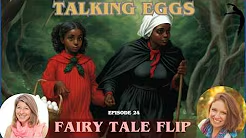
Talking eggs. A mysterious old woman in the woods. Two sisters. One choice. This Creole folktale from the American South has been hiding in plain sight — and it has a lot to say. This episode dives deep into that tension through one of the most richly layered folktales from the American South — The Talking Eggs.
Blanche and Rose are two sisters whose choices take them down very different paths. One finds treasure. The other finds danger. But this story is so much more than a simple moral tale — it’s a window into Louisiana’s Creole heritage, African spirituality, the complexity of family dynamics, and the societal expectations women have navigated for generations.
In this episode we explore:
The cultural roots that make this story uniquely powerful
How African symbolism and Creole tradition are woven into every layer of the narrative
What the tale’s villains reveal about the societies that created them
The role of thresholds and transformation in folklore — and what they mean for our own lives
Whether you’re a longtime lover of folklore or just discovering the world of fairy tales and folktales, this episode will change the way you see the stories you grew up with.
Listen to the full episode and share it with someone who needs to be reminded that kindness is never wasted.
#FairyTales #Folklore #TalkingEggs #CulturalStorytelling #FabricOfFolklore #CreoleCulture #FairyTaleFlip #Storytelling #FolkloreForWomen
00:00 Introduction to Fairy Tales and Folktales
01:55 The Talking Eggs: Summary and Themes
07:10 Cultural Context: Louisiana’s Rich Heritage
11:59 The Role of Women in the Tale
17:07 Comparative Analysis: Folktale Types and Influences
24:14 African Spirituality and Symbolism in the Story
27:33 The Power of Respect and Transformation
32:58 Cultural Layers: Creole and African Traditions
39:08 The Role of the Villain and Societal Mirrors
49:12 Thresholds of Transformation in Fairy Tales
Follow us
Youtube channel- / @fabricoffolklore8449
Linkedin- / fabric-of-folklore-podcast
Apple Podcasts: https://podcasts.apple.com/us/podcast…
Spotify: https://open.spotify.com/show/5eCrObj…
49 Linkedin-  / fabric-of-folklore-podcast Apple Podcasts: https://podcasts.apple.com/us/podcast… Spotify: https://open.spotify.com/show/5eCrObj…
Transcript
0:07
7 seconds
Welcome, welcome to Fairy Tale Flip episode. Oh, I forgot to look what episode we’re on. Maybe we’re on 24, I think. That sounds That sounds right. We’ll have to look it up later.
0:19
19 seconds
I’m Vanessa Y. Rogers. I’m the podcast host of Fairy No, of Fabrica Folklore.
0:25
25 seconds
And this is Donna Lee Fields, my co-host. and she runs a website called Scaffolding Magic and has a lot of
0:32
32 seconds
educational resources and also has her own podcast that’s um mostly just backlogged of education uh interviews.
0:41
41 seconds
It’s very fascinating doorways to learning with Donna. Um, and we come together once a month and we look at one
0:48
48 seconds
fairy tale or folk tale, um, sometimes mythology even, and we look at it from
0:56
56 seconds
the perspective of what it was saying culturally, what it meant historically, what are the hidden meanings, what can
1:03
1 minute, 3 seconds
we gain from these tales today? Do they have an a significance in our current
1:10
1 minute, 10 seconds
modern lives? and how can we utilize these tales to better ourselves, if you
1:19
1 minute, 19 seconds
will. Um, and and so Donna is going to give us the summary of the story of the talking eggs.
1:29
1 minute, 29 seconds
Yeah, this is your ch this is your choice, Vanessa. You grew up with this tale, isn’t it? Wasn’t it?
1:34
1 minute, 34 seconds
Yes, it was. So my aunt was a kindergarten teacher and so she did a lot of folk tales growing up and so I
1:42
1 minute, 42 seconds
was kind of immersed in it from my aunt and so this was one of my favorite stories and I think um we’re going to go over the element of the old lady who
1:50
1 minute, 50 seconds
takes off her head but I think that was probably why I really like uh enjoyed this tale because it was much more
1:58
1 minute, 58 seconds
supernatural than most of the other folk tales or fairy tales I had come across.
2:03
2 minutes, 3 seconds
And so I I think I was drawn to that creepiness of it.
2:08
2 minutes, 8 seconds
Yeah. And it does get creepy in a few places. So just a quick summary because I know we both want to get into this and and the version I’ve never I hadn’t read
2:17
2 minutes, 17 seconds
before until you suggested it and takes this this type fairy tale type to a whole new level. M so the summary is
2:25
2 minutes, 25 seconds
that Rose and Blanch are sisters and live in the deep south in this version in an old shack in the woods with their mother and it’s their b my biological
2:34
2 minutes, 34 seconds
mother by the way. The mother is only kind to Rose and treats Blanch more like a slave though Rose is rude and Blanch
2:42
2 minutes, 42 seconds
is actually very kind. So one day Blanch goes to the well. Her mother asks her to go to the well in the middle of the day and to get water and it’s it’s um
2:49
2 minutes, 49 seconds
incredibly hot but she goes anyway and finds an old woman there. The woman takes Blanch home, but makes her promise not to laugh at anything she sees there.
2:58
2 minutes, 58 seconds
And there are some strange things at this woman’s home. She rewards Blanch for following her promise to not laugh
3:05
3 minutes, 5 seconds
with some eggs. Um, and she tells her to only take the eggs which say take me and not take the eggs which say don’t take me. And when Blanch gets home, she takes
3:14
3 minutes, 14 seconds
the eggs. They’re actually just plain white eggs. turn throws them over her shoulder and they turn out to be filled with gems, fine clothes, and other
3:23
3 minutes, 23 seconds
treasures. And then Rose, her sister, wants the same thing. And her mother wants Rose to go and get the same thing.
3:29
3 minutes, 29 seconds
And Rose goes to the woman’s house, but she chooses the eggs that say, “Don’t take her.” And they’re these beautifully
3:36
3 minutes, 36 seconds
colored eggs. And when she gets home, she throws them over her shoulder, and the eggs turn out to be full of toads and poisonous animals and a large gray
3:43
3 minutes, 43 seconds
wolf. So that’s the summary of this version of the story.
3:47
3 minutes, 47 seconds
And and I think that the end part is important because Blanch leaves for the grand city with all of her treasures.
3:55
3 minutes, 55 seconds
And that’s um an important element that we will definitely cover. Very important. Yeah.
4:01
4 minutes, 1 second
So what did you think this was this first time you you’d come across this tale?
4:05
4 minutes, 5 seconds
It wasn’t the first time I came across this tale type. And that’s why I loved it because I immediately um honed in on the type which was the kind and unkind
4:14
4 minutes, 14 seconds
girls. And it’s the Arie Thompson Uther type of the kind unkind sisters.
4:19
4 minutes, 19 seconds
Vanessa, we probably haven’t talked about the f the folktale types in a long time. And I just wanted to give a really quick review if that’s okay with you.
4:28
4 minutes, 28 seconds
Yeah.
4:28
4 minutes, 28 seconds
Okay. So, really quickly, what is the ATU fairy tale type? It’s Arie Thompson Uther and it’s an index. It’s a
4:36
4 minutes, 36 seconds
classification system and it was designed for people like Vanessa, me and Vanessa and for people listening identifying recurring plot patterns in
4:45
4 minutes, 45 seconds
the narrative structure of any version so that we can organize and classify and analyze the folktales more easily. So it
4:53
4 minutes, 53 seconds
helps us research and it helps us find different versions of the tales which Vanessa and I always have. We always offer you different versions of the same
5:01
5 minutes, 1 second
tail type. And so this list has been updated exhaustively over the past few
5:07
5 minutes, 7 seconds
year past 100 years. It was first done in the 19 1910 by Aniti Arie Finnish and
5:15
5 minutes, 15 seconds
then in 1928 by St Thomas he was a student of Aries and then most recently in 2004 by Uti Ucher Uther.
5:24
5 minutes, 24 seconds
I almost immediately thought about Baba Yaga uh when I was reading through this.
5:30
5 minutes, 30 seconds
Did they did that come to your mind as well?
5:32
5 minutes, 32 seconds
It didn’t, but I understand why you did, but why don’t you explain that the Okay, so I’ll just give the listeners a quick rundown of the story of Vasilla,
5:40
5 minutes, 40 seconds
the beautiful. She has her mother has died. She has a stepmother, and the stepmother demands that she goes to get
5:47
5 minutes, 47 seconds
fire from Baba Yaga. Babyaga is an old witch like character in the woods in the deep woods and she’s very mean and she
5:56
5 minutes, 56 seconds
has a long nose and she eats children and um so Vasilla has this beautiful this little doll that was given to her
6:04
6 minutes, 4 seconds
by her mother and her the doll kind of guides her to Bobby Yaga’s hut in the woods and Baba Yaga demands that she
6:12
6 minutes, 12 seconds
does all these chores for her in order for her to to gain fire and she does with the help of um the doll because
6:19
6 minutes, 19 seconds
it’s really impossible tasks. Um unlike the old woman in the woods at this story who is kind and gentle and helpful,
6:27
6 minutes, 27 seconds
Babiaga is scary and mean and is threatens children to eat children. But in the end, Bobby Yaga gives her her
6:34
6 minutes, 34 seconds
fire and she goes and uh there’s a happily ever after in the end. But both
6:40
6 minutes, 40 seconds
have this spiritual liinal character in the woods who kind of transform their
6:49
6 minutes, 49 seconds
existence after they go into the the woods and uh go through this process of
6:57
6 minutes, 57 seconds
um changing in in a fundamental way.
7:02
7 minutes, 2 seconds
That’s right. And the woods in fairy tales also represent transformation. So it makes a lot of sense.
7:08
7 minutes, 8 seconds
Um, in this tale, the woods are about transformation, but water is a motif that’s even more important in this tale.
7:15
7 minutes, 15 seconds
So before we jump around and all, where should we start, Vanessa? We have so many things we want to talk about.
7:20
7 minutes, 20 seconds
We do have so many things. I wanted to start in Louisiana so that it can kind of help us to look at this story because
7:28
7 minutes, 28 seconds
one of the really fascinating elements of the story. And this was similar to our last story, The Princess of the Spring, where there were so many
7:35
7 minutes, 35 seconds
different cultures that are feeding into this one tale. Yeah.
7:39
7 minutes, 39 seconds
Um, and this happens in this tale as well because, um, if you were familiar with Louisiana,
7:46
7 minutes, 46 seconds
Louisiana is one of the richest cultural uh, states of the United States. There’s so much beautiful culture there uh,
7:55
7 minutes, 55 seconds
because of its history. So, I’m just going to do a quick rundown. Um 1699 Louisiana is claimed by France. Then in
8:04
8 minutes, 4 seconds
1719, two ships bring 500 enslaved people from the Synagogia region. So it’s there’s several countries within
8:14
8 minutes, 14 seconds
that region, but they’re all coming from the same region. 1724, the code noir is enacted, and this is a
8:22
8 minutes, 22 seconds
French law that in gives enslaved people different rights than do the British.
8:29
8 minutes, 29 seconds
And we’re going to talk a little bit more about this in the future and how this um really changed the culture of
8:35
8 minutes, 35 seconds
Louisiana. 1931 they stop the slave trade and it actually really helps to
8:44
8 minutes, 44 seconds
um com make the uh the the people who are living there more homogeneous and allows them to kind of consolidate their
8:53
8 minutes, 53 seconds
culture in a more fundamental way. And also they are allowed to to have these gatherings. The slave people, the
9:02
9 minutes, 2 seconds
enslaved uh individuals are allowed to have gatherings on Sunday where they have these traditions of having African
9:10
9 minutes, 10 seconds
music and they have dancing and drumming and storytelling. So we don’t see this in the British colonies. The British
9:17
9 minutes, 17 seconds
colonies work really hard to prevent any of this culture from homogenizing. Um,
9:25
9 minutes, 25 seconds
but the French allow it. And so this is why we see this in Louisiana today and we don’t see it in other places. In
9:32
9 minutes, 32 seconds
1809, Haitian refugees are come in from San Domingo and they double the new New Orleans population which brings the
9:41
9 minutes, 41 seconds
voodoo and hudoo traditions. Uh, which deepens the spiritual layer of the creole culture that we’ll be talking
9:50
9 minutes, 50 seconds
about. Um the person who records this story in written form records it Alice
9:58
9 minutes, 58 seconds
Forier Forier as a teenager records it and then in 1895 he publishes it when he
10:06
10 minutes, 6 seconds
becomes a linguist um and then it’s entered into written language. But the next year, the very next year, 1896, is
10:16
10 minutes, 16 seconds
when the separate be equal, the pie versus Ferguson uh Supreme Court decision basically legitimizes those Jim
10:23
10 minutes, 23 seconds
Crow laws and reestablishes racial racial segregations and um kind
10:31
10 minutes, 31 seconds
of dissimilates dismantles the three tier creole world that’s had been created in Louisiana, which was really
10:40
10 minutes, 40 seconds
distinct. We’ll talk about it a little bit more later, but um it dismantles a lot of the structure that had been there
10:47
10 minutes, 47 seconds
prior. And so the fact that he was able to publish it prior to that is really great because it helps to um it helps uh that it was collected prior to this.
11:02
11 minutes, 2 seconds
Any thoughts about that?
11:05
11 minutes, 5 seconds
I was I was just thinking about the fact that it’s a male um who published it, who wrote it down and published it because it’s actually a woman’s tale and it’s actually told mostly by the
11:13
11 minutes, 13 seconds
grandmothers and so it’s kind of ironic that the telling the written telling and also the one that I like the most the the in YouTube is by a male as well.
11:22
11 minutes, 22 seconds
interesting. We’ll do the link in the show notes because I link I listened to a few of the retelling of the story in YouTube and they’re all, you know,
11:30
11 minutes, 30 seconds
obviously Anglo-Saxon women, girls, and there’s one by what’s pretty clearly a Creole accent, someone from the deep
11:38
11 minutes, 38 seconds
south, and it was just lovely built. So, we’ll put that link in there.
11:43
11 minutes, 43 seconds
Um, and I did want to mention it is very interesting that there is not a single male in the story. And that is pretty
11:50
11 minutes, 50 seconds
rare, especially when you look at European tales because European tales almost always have a a male at the end
11:57
11 minutes, 57 seconds
at least that to marry the female as kind of the reward for um right but we don’t see that in this tale and
12:06
12 minutes, 6 seconds
there’s not even a male witness because it’s unnecessary.
12:09
12 minutes, 9 seconds
And in somewhere in your research I know you have this because I have it too is that women were given a lot of uh rights in Louisiana and black women were given
12:17
12 minutes, 17 seconds
a lot of rights. they were given rights of ownership and so there was no black there is no black character in the tale
12:24
12 minutes, 24 seconds
and as you say in the end Blanch goes to New Orleans to the city to be a fine lady
12:31
12 minutes, 31 seconds
and she could be a fine lady because in Louisiana at that at that time a black woman could become a very wellestablished woman of society and be
12:41
12 minutes, 41 seconds
an owner of property and and have you know have money that she could control herself until the 1896 6 uh separate but equal
12:50
12 minutes, 50 seconds
was enacted and then it dismantled that that um middle class of the freed black
12:57
12 minutes, 57 seconds
people. Right. I wonder if you know I don’t live in Louisiana. You’re down in the south. I don’t know if you know much about Louisiana if it has that flavor
13:05
13 minutes, 5 seconds
anyway if women are still valued in Louisiana or is it pretty much I don’t really know about that but it I’ve I’ve really only visited New
13:14
13 minutes, 14 seconds
Orleans and a um a few little cities because I am close Texas is gen is close
13:21
13 minutes, 21 seconds
to Louisiana um but is a very poor state is one of the poorest states in the
13:28
13 minutes, 28 seconds
United States but it is just beautiful in its culture It’s just amazing to visit. So, I definitely encourage
13:36
13 minutes, 36 seconds
anybody who has the opportunity to to go to New Orleans because the music and the dancing and the storytelling, there’s there’s a lot of rich uh culture there.
13:47
13 minutes, 47 seconds
Well, why don’t we go?
13:48
13 minutes, 48 seconds
I did want to make one note because I wasn’t positive on what the difference between kinjun and creole were. And
13:56
13 minutes, 56 seconds
there’s a lot of different definitions, but just to be the simplified version is Kinjun refers to the countryside of of
14:04
14 minutes, 4 seconds
South Louisiana and Creole looks more at the mixed colonial and urban side. So that’s the difference when you’re saying Creole and Cinjun.
14:13
14 minutes, 13 seconds
Interesting. All right. Well, why don’t we talk about that that you know the Creole influence in and the African influence and the French influence on
14:21
14 minutes, 21 seconds
this tale because as we say I gave a summary of the the tale type and that’s the basics are included in the story but
14:28
14 minutes, 28 seconds
we do have as I mentioned in the very beginning the mother is biological and there are very few fairy tales that we talk about that have a biological mother
14:35
14 minutes, 35 seconds
because really we want to give the evil to the we want to give the evil sort of stamp to a non-biological woman. It’s
14:44
14 minutes, 44 seconds
horrible. It’s even more horrifying to think that a biological parent could be so cruel to a child and yet we know it’s true unfortunately.
14:52
14 minutes, 52 seconds
Right.
14:54
14 minutes, 54 seconds
So why don’t we talk about why why some of these influence how these influences from the African, the French and the Creole.
15:01
15 minutes, 1 second
Yeah.
15:02
15 minutes, 2 seconds
Um so I’m I would like to start with the French because that’s the the colonizers, the original colonizers.
15:08
15 minutes, 8 seconds
um obviously prior to after the Native Americans were there because they colonized after people already lived
15:16
15 minutes, 16 seconds
there for a very long time. Um so the most direct ancestor of this tale that I found was the toads and diamonds by
15:24
15 minutes, 24 seconds
Charles Perau. Um and this one is really very similar. The there’s a kind girl, there’s a kind sister and a mean sister.
15:32
15 minutes, 32 seconds
And I think this one actually doesn’t have a stepmother either. There’s one of them that is related that has a
15:39
15 minutes, 39 seconds
biological mother. Um, and she goes, the kind daughter goes to the well. She and she uh gives a water to an old woman at
15:49
15 minutes, 49 seconds
the well and the old woman turns into a fairy and blesses her with uh the
15:55
15 minutes, 55 seconds
blessing of um jewels and flowers coming out of her mouth. So then the mean sister comes and she wants the same thing, but she’s looking for an old
16:04
16 minutes, 4 seconds
crone and instead she sees this fine lady and the fine lady asks for water and the mean sister dismisses her and so
16:12
16 minutes, 12 seconds
she turns into a fairy and makes and all of the snakes and toads and wasps come out of her mouth every time she speaks.
16:20
16 minutes, 20 seconds
And so then the kind sister uh runs into a prince and he marries her and they live happily ever after. So, of course,
16:28
16 minutes, 28 seconds
that’s very the European version where there was always a man who has to be the
16:33
16 minutes, 33 seconds
the reward for uh the ending of this story.
16:39
16 minutes, 39 seconds
That’s right. Because Blanch goes off and she doesn’t go to marry. She goes to be a fine lady, but it doesn’t say she goes and finds a man and and lives with
16:47
16 minutes, 47 seconds
him. No, she goes and she becomes her own woman. And that’s the same in some versions of the Babi Yaga as well
16:54
16 minutes, 54 seconds
because Vasilla the Beautiful, she goes off and it becomes a um she has her own life. At some versions she marries but
17:02
17 minutes, 2 seconds
some versions she just has a beautiful life in the city.
17:07
17 minutes, 7 seconds
I Yeah, I don’t remember that. It’s interesting. Yeah, because for me the most that story really centers around Bobby Yaga and the girl and you know me, I like the protagonist and the protagonist is Bobby Yaga in this story.
17:17
17 minutes, 17 seconds
The protagonist is actually not the old woman at the well. She’s really really sweet. The antagonist in this story is the mother. Would you agree with that?
17:25
17 minutes, 25 seconds
The mother and the the the sister. Yeah.
17:29
17 minutes, 29 seconds
Yeah. But I mean, I really dig in deep with this. It’s the mother because Okay.
17:34
17 minutes, 34 seconds
The sister has been trained by the mother to be a really not very nice person. And if you notice at the end of
17:40
17 minutes, 40 seconds
the story, um, Rose comes back and she is chased by all these poisonous animals and the the greywolf and the toads and
17:47
17 minutes, 47 seconds
everything, but the mother also gets attacked by these animals. And it’s completely justifiable because the mother is the one that’s instigated the
17:56
17 minutes, 56 seconds
whole division. And the mother is one who’s discredited her her biological daughter Blanch and sent her. So,
18:04
18 minutes, 4 seconds
and I have that in my notes as a African um kind of morality. You sow what you
18:11
18 minutes, 11 seconds
reap. So, she’s getting her just reward or you know reaction. um because she was
18:20
18 minutes, 20 seconds
just as horrible as as Rose were or probably worse pro because she’s the one who’s she created she created Rose and so it’s
18:29
18 minutes, 29 seconds
interesting because then I was thinking about the name Rose is usually this beautiful name in mo in other fairy tales and in this one she’s the mean
18:38
18 minutes, 38 seconds
sister Blanch how many time Blanch actually comes up a lot more than I thought there are a lot of fairy tales that have the name Blanch in it but
18:45
18 minutes, 45 seconds
Blanch means white and in French blanch is white in English. And that’s kind of interesting because it really uh mirrors
18:53
18 minutes, 53 seconds
the whole idea that when you become wealthy and respected, it’s more of a white in that society, it was more of a
19:01
19 minutes, 1 second
white circumstance. Am I being clear in that sense? So they even though these were it was a black mother, two black children,
19:09
19 minutes, 9 seconds
they they named the good daughter Blanch as if to say the connotation is she’s lighter, she’s closer to the white
19:17
19 minutes, 17 seconds
community. It’s a horrible thing to think about, but that’s one of the con that was one of the twists in this version.
19:23
19 minutes, 23 seconds
Yes. And then what about rose? What did you think about rose? The name the name the name usually means this beautiful you know um magical smelling
19:33
19 minutes, 33 seconds
flower and yet in this one rose uh some of the research says well it’s red. I mean I don’t think of rose as red but
19:40
19 minutes, 40 seconds
it’s red onus um evil and so she’s named with as a red character. So what is
19:47
19 minutes, 47 seconds
what I found was that in Yoruba tradition which is central west African tradition um the color of shongo which
19:56
19 minutes, 56 seconds
is red the deity of lightning power and sometimes destructive forces. So it was suggesting that rose burns so bright she destroys herself.
20:06
20 minutes, 6 seconds
Interesting. Do you think that’s the case in the story? I don’t see that kind of No, I don’t really know. It’s it’s hard
20:14
20 minutes, 14 seconds
to know. You know, one of the things that I came across is that there’s so many different layers that are being
20:23
20 minutes, 23 seconds
read by different individuals. So, like the French people or the Catholics are reading the story and getting different messaging than are the Creole people.
20:34
20 minutes, 34 seconds
Um, and so it’s really fascinating how there’s these different meanings being
20:41
20 minutes, 41 seconds
sent to the different readers. So I I think it’s one of those those that it’s based off of where you’re coming from maybe.
20:50
20 minutes, 50 seconds
Yes. Yeah. There are different I mean I my first school that I was student teaching in was a Native American school
20:57
20 minutes, 57 seconds
and I was taught that owls just by the general population owls were taught were good luck. If you saw an owl it was good luck. And yet in the classroom there
21:06
21 minutes, 6 seconds
were um Native Americans from different pblo and each pblo they had a different take on what an owl signified. Some of them meant said that if you see an owl,
21:14
21 minutes, 14 seconds
run for your life. You know, it was it was scary. So, yes, it all depends on where you’re from and what culture. Well, and you’re in Mexico, right?
21:22
21 minutes, 22 seconds
Because in Mexico, there’s the story of Luga. What is her name? She’s the witch that transforms herself into an owl.
21:30
21 minutes, 30 seconds
Oh my goodness. You talk about her. Uh yeah, and she is an omen of death.
21:36
21 minutes, 36 seconds
Okay. But luga means lettuce. So, okay. It’s not lucha. I can’t remember what it’s called. It’s like there’s an L E. We’ll have to look it up.
21:45
21 minutes, 45 seconds
Okay. Um, we’ll look it up. Mexican um evil. Would you say evil Mexican witch?
21:52
21 minutes, 52 seconds
Yes. She’s a witch. She’s a a shape shifter. Um Okay. So, while you’re doing that, I was going to tell one other story. The mother ho story. Mother.
22:00
22 minutes
Excuse me. Excuse me. You were Luza. Luza. Luza. Yeah. There it is. Was a shape-shifting owl witch.
22:08
22 minutes, 8 seconds
Yeah.
22:08
22 minutes, 8 seconds
Okay. Very well done. Very well done, Vanessa. Okay.
22:11
22 minutes, 11 seconds
And and she she bleeds into South Texas, so that’s a legend here, too.
22:16
22 minutes, 16 seconds
Wow. Okay. So, please go ahead with what you were going to say.
22:19
22 minutes, 19 seconds
Um Okay. So, in the the German version, so the version I told before was the French version. This the German version
22:26
22 minutes, 26 seconds
is with um Fra Hole or Mother Hole. Um, basically this the kind sister dives into a well because she drops her
22:35
22 minutes, 35 seconds
spindle and she finds herself in this magical realm and she’s helpful. There’s like an oven that needs bread taken out,
22:43
22 minutes, 43 seconds
an apple tree that needs apples shaken out of it and Mother Holy offers her a place to sleep and and uh eat for free
22:51
22 minutes, 51 seconds
if she just does chores. And she’s very happy there. And she is actually I believe we talked about her as well in Baba Yaga because she is um tied to
23:00
23 minutes
deities and female deities and she uh is in charge of the snowfall in in in
23:09
23 minutes, 9 seconds
Germany. And so when she shakes her her feather bed or her feather pillowcase and the feathers go flying, it’s causing
23:17
23 minutes, 17 seconds
the snow to to fall on the earth. Um, and then so she stays there for a while until she gets homesick. I don’t know if
23:25
23 minutes, 25 seconds
that what that noise was. So she stays there for a while until she gets homesick. And then, um, as she’s leaving, she’s showered with gold. And
23:33
23 minutes, 33 seconds
so her mean sister wants, you know, the reward. And so she does the same thing, but when she leaves after she’s being lazy, uh, she’s showered with pitch. And
23:42
23 minutes, 42 seconds
so she’s covered in pitch for the rest of her life. And the kind sister is showered with gold. And she lives a wealthy life. So, it’s the same type of
23:50
23 minutes, 50 seconds
thing, but it’s the one in found in Germany.
23:53
23 minutes, 53 seconds
That’s like the tar baby. Do you remember the tar baby story?
23:57
23 minutes, 57 seconds
Yes. Isn’t that like a southern story, too?
24:00
24 minutes
It is. Yep. And I grew up with that, but I mean, my mother was Texan, so maybe that’s why we had it in our house. I didn’t know that.
24:08
24 minutes, 8 seconds
Yeah. Yeah. I don’t like um Okay. So then there’s the West
24:15
24 minutes, 15 seconds
African layer with the Haitian um layers. And we really see the difference here with the witch-like character
24:25
24 minutes, 25 seconds
because a lot of the witches in European tales are mean, right? They’re they’re bad. They’re it’s black and white if
24:32
24 minutes, 32 seconds
they’re bad or good. And she is um with the her ability to remove her head
24:40
24 minutes, 40 seconds
that’s distinctly African. You see this a lot in different African traditions.
24:45
24 minutes, 45 seconds
Um the Yoruba tradition that we were talking about before, uh she represents this elderly spiritual woman mother and
24:55
24 minutes, 55 seconds
they these spiritual women are able to shapeshift into birds. Again, the shape-shifting into birds.
25:02
25 minutes, 2 seconds
Um and she represents this uh threshold, this liinal figure that is the go
25:10
25 minutes, 10 seconds
between the spiritual world and the mo and the human world. And so all of these things that come out like there’s a
25:18
25 minutes, 18 seconds
two-headed cow, there’s these um rainbow chickens, all of these elements within this story
25:28
25 minutes, 28 seconds
are distinctly African and they’re they’re markers of the African spiritual elements because you don’t really the
25:37
25 minutes, 37 seconds
spiritual elements. There’s not so much spiritual elements in um European tales.
25:42
25 minutes, 42 seconds
are magical elements, but usually they’re very uh obviously magical, whereas that’s not necessarily the case
25:50
25 minutes, 50 seconds
quite as much in this one. And then we also see this difference in how they’re punish the sister and the mother are
25:57
25 minutes, 57 seconds
punished. It’s more about the ecological punishment that the the natural world punishes them. Whereas there’s usually
26:04
26 minutes, 4 seconds
like a punishment from like the sup like a a divine force like a a fairy or a
26:12
26 minutes, 12 seconds
witch or someone is is in charge of punishing the bad person. Whereas in this story it’s the the nature rebels
26:21
26 minutes, 21 seconds
against their their illtemper cruelty.
26:27
26 minutes, 27 seconds
Okay. Okay, but let’s focus on the the head, removing the head, because I didn’t say that in the summary. One of the things she made sure that Blanch and
26:34
26 minutes, 34 seconds
Rose didn’t laugh at was she actually took off her head, put it on her head on her own lap and brushed her hair out.
26:40
26 minutes, 40 seconds
And that is, as you say, very, it’s a big motif in African spiritual traditions. But think about it, you
26:48
26 minutes, 48 seconds
know, you’re taking off your head. You can say the mind controls the body. I don’t say that. I say that the spirit controls the mind. Um, but what it’s
26:56
26 minutes, 56 seconds
doing is she’s saying, “My head does not control my body. My my head does not rule what I do. I decide what I do.”
27:05
27 minutes, 5 seconds
Because she still has complete control over her actions even though her head is literally in her lap.
27:10
27 minutes, 10 seconds
And so what she’s saying is um think outside think outside the box. Think um about what really is power for you.
27:20
27 minutes, 20 seconds
Think about where your power comes from and think about how you can claim more of your power.
27:26
27 minutes, 26 seconds
Blanch is certainly looking at this woman whose head is off of her body in complete control of everything she’s doing still. And I thought it was very powerful motif.
27:36
27 minutes, 36 seconds
Yeah. And like I was saying in the the start of this the episode, this is I think one reason why this story stuck with me because you don’t see this uh
27:45
27 minutes, 45 seconds
element of detaching body parts in European type fairy tales. And so I
27:51
27 minutes, 51 seconds
found it very unique and uh scary and Blanch is scared but at the same time
27:58
27 minutes, 58 seconds
she’s respectful. And that’s the difference between the behavior of Rose and and Blanch because Blanch recognizes
28:06
28 minutes, 6 seconds
her as a spiritual being and as an ancestral spirit um that should be uh
28:15
28 minutes, 15 seconds
given respect. Yeah, that’s right. And what I I see now as you’re talking, what I see is that this woman is giving Blanch the opportunity
28:24
28 minutes, 24 seconds
to to be respectful. She’s giving the opportunity to Blanch to see that there’s a transformation inside of herself. She’s offering her an
28:32
28 minutes, 32 seconds
opportunity to find that power from within her by not laughing at what seems to so out of the norm. As you say in
28:40
28 minutes, 40 seconds
European traditions, if someone’s body part is cut off, it stays cut off. It’s not put back on. And in this one, the woman is showing her all is not what you
28:49
28 minutes, 49 seconds
see it seems to be. So believe in the spirit, believe in magic. Mhm.
28:55
28 minutes, 55 seconds
And yeah, she wins by doing that by respecting the woman’s wishes and she becomes more powerful because she was respectful and
29:04
29 minutes, 4 seconds
really loses because she wasn’t respectful.
29:07
29 minutes, 7 seconds
Yes. And I also read some point um I have some notes about when she’s throwing the eggs over her shoulder
29:17
29 minutes, 17 seconds
because in African tradition the behind you is the spirit world and in front of you is the human world and as she’s
29:25
29 minutes, 25 seconds
throwing the eggs behind her she is um paying homage
29:33
29 minutes, 33 seconds
to the African tradition to the to the African tradition but also her ancestors.
29:40
29 minutes, 40 seconds
Yeah, it’s lovely. She throws them over.
29:42
29 minutes, 42 seconds
I mean, in in your notes, I was reading it, and it’s such a lovely interpretation, and it’s a cultural tie where you’re throwing you’re throwing something over. You’re letting go.
29:50
29 minutes, 50 seconds
You’re letting go of everything you’ve known because she didn’t know what was going to happen once she threw the eggs over her shoulder.
29:56
29 minutes, 56 seconds
And so, with complete faith, she throws them over her shoulder, letting go of her known life. And as you say, throwing it into the spiritual world. And because
30:05
30 minutes, 5 seconds
of that, because of her belief in her, you know, belief in in what this woman has told her to do, she
30:11
30 minutes, 11 seconds
wins. She her life changes completely, right? In so many of these fairy tales, transformation is an underlying current
30:19
30 minutes, 19 seconds
and theme, right? We always want to see a transformation of our main protagonist. And we definitely see that
30:27
30 minutes, 27 seconds
with the breaking of the egg. And I think it’s really a beautiful um symbol because if you’re holding the egg, transformation can’t come, right? if
30:36
30 minutes, 36 seconds
you’re holding on to it, if you’re keeping it precious and safe. Uh but it’s it requires trust and faith to
30:43
30 minutes, 43 seconds
break the egg. And that breaking of what you’re holding on to is how you’re able
30:51
30 minutes, 51 seconds
to go through the transformation process. Absolutely.
30:56
30 minutes, 56 seconds
It’s really a difficult thing to do to let go.
31:01
31 minutes, 1 second
Uh but it’s necessary in order to move forward and and to transform into who you want to be.
31:10
31 minutes, 10 seconds
You know, literally that’s the same because you can hold an egg in your hand and until you break it in a frying pan or however you want to do it, it’s not
31:17
31 minutes, 17 seconds
going to be edible. Unless of course you like eating a raw egg whit, you know, with a shell.
31:24
31 minutes, 24 seconds
Literally, it’s the same as figuratively. And eggs, as you were saying, we were saying before, it depends on what culture, what country we’re talking about, but eggs have deep symbolism in many different cultures.
31:35
31 minutes, 35 seconds
And in in ancient Greece, there was um it was depicted as a snake coiled around itself, the orphic egg, and it was
31:44
31 minutes, 44 seconds
believed to have been hatched from a primordial deity.
31:47
31 minutes, 47 seconds
In Hinduism also, which is the oldest um spiritual legacy we have on this planet,
31:54
31 minutes, 54 seconds
um the egg is the cosmos. The egg is everything.
31:59
31 minutes, 59 seconds
And so you break an egg open and there’s so many different levels to an egg. So many different trans transmutations it takes on.
32:08
32 minutes, 8 seconds
So I could go through a lot of different ones. South Pacific is another one. They um they they believe that the yolk and the white of the egg is the heaven and
32:16
32 minutes, 16 seconds
earth. So the egg is a very powerful motif in fairy tales.
32:22
32 minutes, 22 seconds
Yes. Yes. I think so as well. And I think that the um it holds hidden truth and hidden power.
32:31
32 minutes, 31 seconds
Nice. Yeah. Okay.
32:34
32 minutes, 34 seconds
What other motifs would you like to talk about? Well, let’s go into the Creole layer.
32:38
32 minutes, 38 seconds
So, we’ve done we’ve done French. We’ve done African/Hian.
32:43
32 minutes, 43 seconds
Let’s go into the Creole layer because this is where the the amalgamation the the the mixing of these two cultures are
32:51
32 minutes, 51 seconds
coming together into the more modern world where this uh the story kind of forms. So we see the it start off on a
33:01
33 minutes, 1 second
poor farm setting which is very uh reminiscent of the free black people who
33:08
33 minutes, 8 seconds
are living in the wilderness in uh in Louisiana because Louisiana territory has one of the largest maroon
33:16
33 minutes, 16 seconds
settlements in North America during the colonial period. So they their population at some point in my notes I have some statistics but they have a
33:26
33 minutes, 26 seconds
very large freed black populations throughout uh throughout Louisiana. And
33:32
33 minutes, 32 seconds
so this is representing these marooned settlements. Um and then like we were saying the ending where Blanch goes to
33:40
33 minutes, 40 seconds
the city to live like a grand lady is very Creole. It’s very much about uh this this idea of what they were able to
33:50
33 minutes, 50 seconds
aspire to because it was something that black people in other places didn’t have. But in Louisiana, there was um
33:59
33 minutes, 59 seconds
there was a a rising in your social class for black people that wasn’t available in a lot of other places.
34:08
34 minutes, 8 seconds
Um, and then the the voodoo connection is African also and Haitian. The um the
34:17
34 minutes, 17 seconds
woman the grandmother is considered a mambo figure. She is uh like I was
34:25
34 minutes, 25 seconds
saying the spirit house. She is the liinal character. And it’s interesting because based off of who is reading it,
34:33
34 minutes, 33 seconds
it can be a moral tale, a spiritual encounter, and it can be read simultaneously at both for both those
34:42
34 minutes, 42 seconds
layers. Um, and so it’s it’s really fascinating that two different people reading it can have two different takes
34:50
34 minutes, 50 seconds
based off of their cultural encoding.
34:54
34 minutes, 54 seconds
And then and then there’s this is a really important part because
35:00
35 minutes
The Blanch is um following her ancestors, her spiritual guide. The the mother, the the the grandmother is
35:09
35 minutes, 9 seconds
basically a spiritual guide, whereas Rose has lost the ability to see with her African eyes. She has adopted the
35:18
35 minutes, 18 seconds
greed of the colonizers. And so she’s destroyed by this the colonizers values.
35:27
35 minutes, 27 seconds
Whereas Blanch is able to retain that older sight of her ancestors and is able
35:34
35 minutes, 34 seconds
to see uh that the plain egg is the way for forward. The plain egg is how the
35:41
35 minutes, 41 seconds
community survives. Not reaching for greed, not reaching uh for
35:47
35 minutes, 47 seconds
uh like be purely wealth but being good and following uh what your ancestors have laid out for you.
35:56
35 minutes, 56 seconds
Okay. Okay. So, let me just put this in context because what you said is so important, but I just want to make sure that our listeners understand. You were talking about the the eggs that Rose chose and the eggs that Blanch chose.
36:06
36 minutes, 6 seconds
Blanch chose the simple white eggs. And so, she chose what’s what seems to be the simple life and yet actually has so
36:13
36 minutes, 13 seconds
many different layers to it. Blanch, excuse me, Rose chose the colorful um the g what looked like gems. And as
36:21
36 minutes, 21 seconds
you’re saying, that’s what the colonists wanted. They wanted wealth. They wanted, you know, to jump right from having nothing to everything. And um she was
36:30
36 minutes, 30 seconds
fooled and Blanch was not. Blanch saw the the power in what looks like simplicity.
36:38
36 minutes, 38 seconds
Mhm. and and and in the end, Blanch actually gets the wealth that Rose covetss, but she does so by following
36:47
36 minutes, 47 seconds
the survival guide that her spiritual guides, her her ancestors are leading her towards. So, she’s not just reaching
36:55
36 minutes, 55 seconds
for wealth, but she gains wealth because she’s being obedient to um this path,
37:03
37 minutes, 3 seconds
right? And also what we could see is that um when she takes the simple egg and she throws it, we’re going back over to the motif of throwing it over her shoulder, but it’s the same sort of
37:12
37 minutes, 12 seconds
idea. Blanch has had to be quiet most of her life. She’s had to swallow a lot of the pain that her mother and sister have given her. She couldn’t she couldn’t say
37:20
37 minutes, 20 seconds
what she wanted to say because she would be beaten even more. And so in throwing something what seems simple over her
37:27
37 minutes, 27 seconds
shoulders, she’s throwing out her complicity. She’s throwing out um her silence and she’s she doesn’t go and
37:37
37 minutes, 37 seconds
punish her parent, her mother and her sister. She just leaves. She said, “Okay, that’s it.” Um yeah, goes to the positive. She doesn’t dwell
37:44
37 minutes, 44 seconds
on trying to revenge herself on on the negative.
37:52
37 minutes, 52 seconds
Um so one of the things I I wanted to point out is Excuse me. Sorry, Vanessa. I had to correct myself. Take revenge.
38:02
38 minutes, 2 seconds
Um, okay. So, this story is recorded in 1895, but obviously it’s older because it’s just when it was written down. Um,
38:08
38 minutes, 8 seconds
but also as you were mentioning before, this this variant is extreme is
38:15
38 minutes, 15 seconds
extremely old. The um two what is it called? The um 480 the kind and unkind girls is extremely old. uh and we see it
38:24
38 minutes, 24 seconds
as we see it in the Arabic world even um in circulation in 8th to 10th century
38:31
38 minutes, 31 seconds
and so it’s it’s showing up um in the Americas from lots of different traditions and they meet each other and
38:40
38 minutes, 40 seconds
they say hey this is we’re similar stories and we’re going to kind of entwin to fit this culture that we’re in
38:49
38 minutes, 49 seconds
now and so I think that’s really interesting how old this variant is um
38:56
38 minutes, 56 seconds
even so one of the guests I have p I have interviewed on my podcast his name is Olrich Marz uh
39:04
39 minutes, 4 seconds
and he says that it’s one of the oldest most frequent Arab oral traditions that is
39:12
39 minutes, 12 seconds
seen throughout the Arab world. This story was recorded by Alice Forier. I
39:19
39 minutes, 19 seconds
I’m bad with names. And he recorded it as a teenager. Um it’s there’s some problematic elements to it as there’s
39:28
39 minutes, 28 seconds
always there always are. He is a professor of romance languages. So he actually one really great benefit to him
39:36
39 minutes, 36 seconds
recording it. He actually records it as a teenager. Um and then he records it in its native language because he has that
39:43
39 minutes, 43 seconds
ability as a linguist. So that is actually quite rare for there to be the original language and then the translation into English. So that’s
39:53
39 minutes, 53 seconds
quite a blessing. But when we when it’s translated from its original language to English, it loses some of the dynamic
40:01
40 minutes, 1 second
call and response that is in the original text because that’s not part of English storytelling as much as it is of
40:10
40 minutes, 10 seconds
the Creole um language that is being spoken during this time and also today.
40:19
40 minutes, 19 seconds
There’s a version that’s being that’s spoken today. He there’s the other problem with his recording,
40:26
40 minutes, 26 seconds
not so much with his recording, is more in his commentary. He’s quite racist and which is common in this time period.
40:34
40 minutes, 34 seconds
There’s a lot of racism. Um uh and so there’s SC a scholar who’s
40:42
40 minutes, 42 seconds
commenting on this says the great irony that a very prejudice man like Fortier should produce as the most scholarly and
40:50
40 minutes, 50 seconds
original work of his whole career studies with which preserves and analyzes the language and the culture of the very people whose right he had so
40:58
40 minutes, 58 seconds
neglected because he speaks about them in this really derogatory way. Uh he believes black people were better off
41:05
41 minutes, 5 seconds
under slavery. He refers to them as children, childlike people. Um and he
41:13
41 minutes, 13 seconds
describes them as just simple and superstitious.
41:16
41 minutes, 16 seconds
But his he is very true to his recording to their recording. So he is not believed that he actually made changes.
41:26
41 minutes, 26 seconds
Um he just his commentary is racist. left out the commentary. Right. Exactly.
41:35
41 minutes, 35 seconds
Um but there al also the the problem of it being recorded as a white man because they’re not going to be quite as
41:43
41 minutes, 43 seconds
truthful in their storytelling because there are encoded messages that they might not want to
41:52
41 minutes, 52 seconds
tell white people during this time period.
41:54
41 minutes, 54 seconds
Well, also Vanessa, it had to have been a translation, right? because it was originally told in one of the African languages and this is what we were saying in the very beginning of the episode is that the grandmother would
42:03
42 minutes, 3 seconds
tell this to the the girls mostly the girls um as it’s recorded in Creole.
42:09
42 minutes, 9 seconds
So I I read that they actually told it in one of the African languages yun does that make sense?
42:16
42 minutes, 16 seconds
I have to find that. Um, and so, oh, I have Curry Vinnie. So, I mean, I’m sure it’s recorded in lots of I don’t know in his book, his book.
42:25
42 minutes, 25 seconds
No, his obviously would have been in English, but I’m just saying that it was No, he records it in the original language and then translates it to English.
42:33
42 minutes, 33 seconds
Interesting. Okay. Yeah.
42:34
42 minutes, 34 seconds
So, it must have been like a French Creole, but I’m sure it was told in lots of different languages. What was So, which
42:42
42 minutes, 42 seconds
language was that that you found? I have to find I was of course when you’re looking for something you don’t find it but um I remember it very clearly because they were saying that the
42:50
42 minutes, 50 seconds
grandmothers would would part of the magic of the story was that it was told in the one of the original African languages and so the grandmothers were telling the girls this is your power.
43:00
43 minutes
This story is about power. This is how you can find believe in the spirit world. believe in your inner power. Um,
43:07
43 minutes, 7 seconds
and believe and respect your respect things that may seem out of the norm.
43:14
43 minutes, 14 seconds
They could be your way out of slavery, out of um, poverty. Yeah.
43:20
43 minutes, 20 seconds
And that obviously is not going to be translated faithfully by a white person who right appreciates slavery.
43:28
43 minutes, 28 seconds
So, I’m surprised that we have this story so beautifully written now. Yeah, it’s ironic. It is very ironic. Wow.
43:36
43 minutes, 36 seconds
Um, also he records Brier Rabbit’s tales which in in French is compel Lain and
43:44
43 minutes, 44 seconds
it’s they’re being recorded at the same time by a friend of his in Georgia. Um, but they are also very reluctant to tell him the Brier Rabbit stories because
43:53
43 minutes, 53 seconds
those even more so have coded resistance to the slavery system within them. And so he’s he’s not understanding why they
44:02
44 minutes, 2 seconds
are aren’t really wanting to tell him these brier rabbit stories of this trickster who
44:09
44 minutes, 9 seconds
tricks the the master slave owner and uh without raising suspicion.
44:17
44 minutes, 17 seconds
That’s right. It’s the same, you know, the animals that they’re that are chosen in the story. I get from what you’re telling me this white man who wrote down the story probably did not understand
44:25
44 minutes, 25 seconds
many of the elements that he was actually writing down because these these animals were chosen very deliberately and the rabbit is supposed to be the trickster and outsmarting the
44:33
44 minutes, 33 seconds
other the characters in the story and the chickens the white chicken is um the most holy in the African stories in the
44:40
44 minutes, 40 seconds
African tradition and seeing a bunch of rabbits um dressed up in in tux and
44:48
44 minutes, 48 seconds
formal clothes and different colors is a way of saying, “Okay, I’m blanking out. I’m going to
44:55
44 minutes, 55 seconds
have to cut this out.” How am I going to finish that one? Um, let’s just keep going. Keep going.
45:04
45 minutes, 4 seconds
Okay. Um, okay. I’m curious your take on the
45:11
45 minutes, 11 seconds
villain. So, you talked about the mother being the villain. In your eyes, is she still a villain or is she a societal mirror or what is she?
45:21
45 minutes, 21 seconds
Because you like to take the you like to take the villain and twist her her vision.
45:27
45 minutes, 27 seconds
That’s right. But I think that a villain and societal mirror can be one and the same. Yeah.
45:33
45 minutes, 33 seconds
So I didn’t realize it until later that I that it was the biological mother and and both of the children who the
45:40
45 minutes, 40 seconds
protagonists are both her biological children. And so you don’t think about the mother automatically as being the villain, as having the onus of the the
45:49
45 minutes, 49 seconds
evil car characteristics. And yet she is. She she’s the one that pushed Blanch to go into the well at the hottest point in
45:58
45 minutes, 58 seconds
the day to meet this lovely woman and to have this spiritual encounter. And she’s the one that pushed Blanch, the daughter
46:05
46 minutes, 5 seconds
that she liked, to try and to match the the wealth that her other daughter found. and she didn’t take any
46:12
46 minutes, 12 seconds
responsibility for it in in the end and yet she was punished for it in the end and you know in in life we don’t always I think many of us want the person who
46:22
46 minutes, 22 seconds
is antagonizing us to be punished to get the consequences and yet it’s not our job to do that it’s
46:29
46 minutes, 29 seconds
you believe in creation if you believe in higher powers higher powers decision when and where and if for the person to get the consequences and in this story
46:37
46 minutes, 37 seconds
she does it’s very satisfying right it’s very satisfying So yeah, I do see her as the the, you know, flipping it on her
46:45
46 minutes, 45 seconds
back. She’s not just a nice woman sitting in a shack taking care of her daughter. She doesn’t take care of her daughter. She takes care of one of them.
46:52
46 minutes, 52 seconds
And and we can’t even say she takes care of that daughter because she raises her with really twisted values.
46:59
46 minutes, 59 seconds
The colonizer’s values.
47:01
47 minutes, 1 second
Let’s say the colonizer’s values. That’s a nice really twi twist there. And usually we would go right to the grandmother at the well and think, “Oh,
47:08
47 minutes, 8 seconds
that’s the witch. She is not the witch even though she takes off her head and she’s she’s disconnected from her mind
47:16
47 minutes, 16 seconds
and she has these like you’re saying in the Bobby Yaga sort of um woods where she has these magical animals all over
47:24
47 minutes, 24 seconds
her that don’t seems like a big disconnect.
47:27
47 minutes, 27 seconds
She is she is spirit. She is what you you know you want to go to a disconnect
47:33
47 minutes, 33 seconds
from the chaos we have around us in the world right now. Wouldn’t it be lovely to go in the woods and see a woman
47:41
47 minutes, 41 seconds
sitting combing her own hair on her lap having colorful chickens and rabbits and eggs? That would be such a relief to me.
47:48
47 minutes, 48 seconds
And and it’s interesting this Mambbo character that she she represents it in African tradition, she is kind of more
47:57
47 minutes, 57 seconds
an ambiguous character in that how you approach her. If you approach her in the
48:03
48 minutes, 3 seconds
right way, in a respectful way, then she will bestow you blessings. Whereas, if you if you approach her in a disrespectful way, you better watch out.
48:15
48 minutes, 15 seconds
There’s going to be consequences, right? And and this is just sort of doubles back on how kind this woman is because she gives both of them the same
48:22
48 minutes, 22 seconds
opportunity. She gives Blanch and Rose the same opportunity. She says, “Don’t laugh and I will give you” and she doesn’t say, “I’ll give you a reward.” She she gives them the option of
48:30
48 minutes, 30 seconds
deciding whether they’re getting a reward or consequences. She says follow the eggs advice. Take the ones that say take me and don’t take the ones that say
48:38
48 minutes, 38 seconds
don’t take me. The girls make the choice. It’s not like the grandmother gives them the eggs.
48:43
48 minutes, 43 seconds
They make their own choices. So she is not only giving them opportunity to dig deeper into where their power is. She’s given the opportunity to make their own
48:51
48 minutes, 51 seconds
choices. And Blanch makes the choice that we we hope she does. and she does, you know, to benefit herself. And Rose
48:58
48 minutes, 58 seconds
makes the choice that sort of manifests what’s going on inside of her. Twistedness.
49:05
49 minutes, 5 seconds
Yeah. Okay. So, I wanted just to uh to bring us back um to one story that I
49:14
49 minutes, 14 seconds
forgot to mention the that came from Africa and uh it’s called the Mufaro’s beautiful daughter. And so like we were
49:23
49 minutes, 23 seconds
saying it came comes from Europe but also there’s tales from from Africa. And basically it’s very similar tale
49:31
49 minutes, 31 seconds
two sisters and one of them uh runs off to the kingdom to try and become the
49:37
49 minutes, 37 seconds
queen. And on her path she dismisses all of these characters. A a boy who asks for food, an old lady. Um it’s some
49:46
49 minutes, 46 seconds
nature who laughs at her. She laughs back at. And so when she goes to to approach the king to become his queen,
49:54
49 minutes, 54 seconds
she sees a five-headed snake. Well, when the nice sister comes along the path, she’s kind to everyone she meets and she
50:02
50 minutes, 2 seconds
gives gifts. And so when she goes to the throne and finds the king, he transforms himself from a snake that she had
50:10
50 minutes, 10 seconds
befriended earlier and he turns into the king and he says, “You’ve been kind to me all along the way. I was the young boy. I was the old lady. I was the nature and I want you to be my queen.
50:21
50 minutes, 21 seconds
And so then the the mean sister becomes the servant. Um and so that’s the the African tale uh version uh that we see
50:31
50 minutes, 31 seconds
coming from from from African and melding with the the European tales. But I really liked that version as well.
50:40
50 minutes, 40 seconds
Yeah, I love that as well. And the last thing that I would like to leave with is about um the symbol that ties everything together. And this is actually from your
50:47
50 minutes, 47 seconds
research and I loved it so much because I realized that it’s something that you feel when you’re reading the story and yet most of us don’t put it into words.
50:55
50 minutes, 55 seconds
And it’s about threshold and the the whole story is about a threshold. The threshold between the cultures, the
51:02
51 minutes, 2 seconds
threshold um the well is a threshold bringing water out of the the well. We we did refer to water really um really
51:11
51 minutes, 11 seconds
lightly in the beginning that water is a threshold. The force is transformation.
51:14
51 minutes, 14 seconds
in the well is water is threshold. The woods, um the old woman’s cabin, the hen house is a threshold. Deciding which are
51:22
51 minutes, 22 seconds
you going to be true to what you’ve been asked to do or not. The egg is a threshold, you know, throwing it over your shoulder, what’s going to come out of it. Um New Orleans is a threshold.
51:33
51 minutes, 33 seconds
the the French, the American, the African, the European, being slave and being free, being under your mother’s
51:41
51 minutes, 41 seconds
rule or someone who’s an antagonist and then going and being under your own power. So threshold
51:48
51 minutes, 48 seconds
is this lovely um idea in the whole story where every paragraph really in the story is a new
51:56
51 minutes, 56 seconds
threshold. something new is happening because of decisions that the girls are making and the characters sort of open
52:03
52 minutes, 3 seconds
up for each other. How does that feel to you?
52:06
52 minutes, 6 seconds
Yeah, I really like that. And I think, you know, it’s it’s the threshold to transformation because each each threshold leads her
52:15
52 minutes, 15 seconds
towards her transformation that she she finds in the end. And really when we’re reading these stories, they’re always
52:24
52 minutes, 24 seconds
about some sort of transformation, but this one is quite obvious in in in its
52:30
52 minutes, 30 seconds
um in its ending. And it’s a really beautiful ending that she doesn’t have to find a man to to be happy. She can she can be happy on her own.
52:40
52 minutes, 40 seconds
Says a married woman. But I love that you’re saying that because we don’t we don’t have to have men. I mean, you know, if we want children, but you know, for happiness.
52:53
52 minutes, 53 seconds
No. Yeah. And I I’m very happy not having ever been married. So, and it was a conscious choice. It wasn’t just that I never found the right one. It was I
53:02
53 minutes, 2 seconds
knew that I wasn’t going to get married and I was very fine with that. So, but you know, if you if you want marriage and you want children and you want a
53:09
53 minutes, 9 seconds
partner for the rest of your life, it’s a lot of work and I I completely support you. So, you just want it in your for your life?
53:17
53 minutes, 17 seconds
Well, not not mine, but I know you work really hard at your marriage and with your children. You’re incredible, Vanessa. So, but you know, I mean, if your husband
53:25
53 minutes, 25 seconds
disappeared for a couple of months, you’d be fine. Yes, we’d survive. We survived. All right. Well, this was a great tale.
53:34
53 minutes, 34 seconds
Thank you for letting me do my childhood, one of my childhood favorites. Yeah.
53:41
53 minutes, 41 seconds
And we haven’t decided next month, but if you have suggestions, let us know. We are always open for suggestions. Um, and
53:49
53 minutes, 49 seconds
so until next time, keep the fairy tales alive. Don’t forget to subscribe. We forgot to say that. Subscribe to to our
53:57
53 minutes, 57 seconds
our channels. Um, wherever you’re listening either YouTube or if you’re listening on the podcasting platform, make sure you hit the like button and
54:06
54 minutes, 6 seconds
subscribe so that you get all of these beautiful tales that you might not know about and understand how they have meaning in your own life. And we’d like
54:14
54 minutes, 14 seconds
to hear what you took away from it because we we talked a little bit about how we what we gathered from it, but
54:21
54 minutes, 21 seconds
there’s something for everybody in these tales.
54:25
54 minutes, 25 seconds
So, all right, have a great one and keep the fairy tales alive. Thanks everyone.